


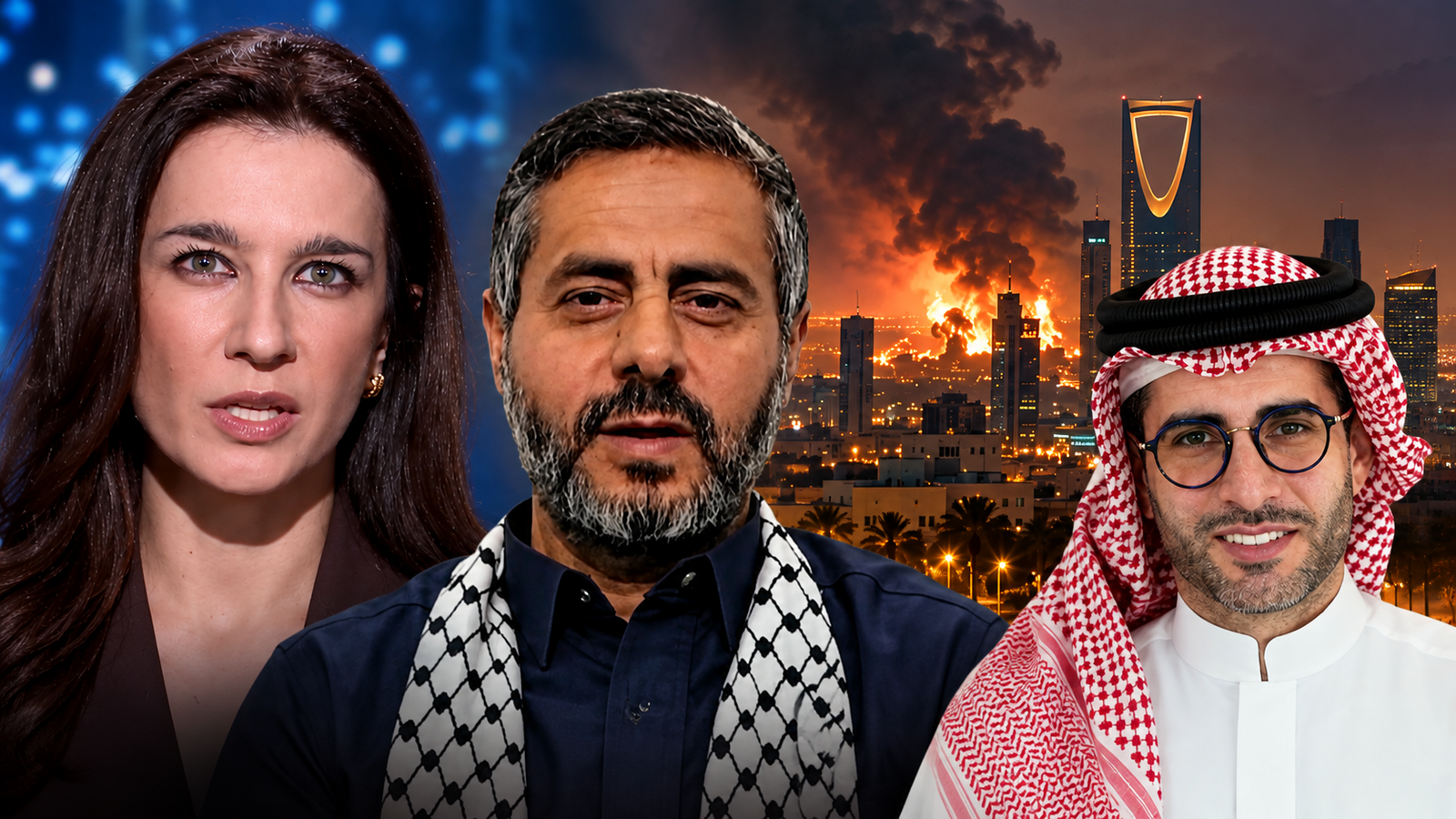
When Houthis strike a civilian airport in the Saudi capital, the world’s biggest news channels cover it in passing. Arab News Editor-in-Chief Faisal J. Abbas asks the question the international media should be answering.
WEBDESK – MEDIABITES – FAISAL J. ABBAS
The missiles fell on Riyadh’s civilian airport. Four people were injured. Debris from intercepted projectiles rained down on residential buildings. A Saudi Aramco facility was struck. And the international news cycle moved on.
Writing in Arab News, Editor-in-Chief Faisal J. Abbas delivered a pointed verdict: the story was not Sky News UK’s Yalda Hakim, who interviewed Houthi senior spokesman Mohammed Al-Bukhaiti with professionalism, neutrality, and rigor. The story is every other international channel that treated an attack on a civilian airport in Riyadh as a footnote, when an attack on JFK, LAX or Heathrow would have consumed days of wall-to-wall coverage.
The Houthi Spokesman Who Blamed the Victim
In the Sky News interview, Al-Bukhaiti’s response to questions about attacking a civilian airport was remarkably brazen. “Why did Saudi Arabia not stop operations in these airports? Why did they gamble with civilian lives?” he said, placing responsibility for the Houthi strike on its target.
Abbas invoked an Arabic saying directly: the excuse is worse than the sin.
The Houthis, who style themselves “Ansar Allah,” or Supporters of God, have attacked the holy cities of Makkah and Madinah, targeted pilgrims at civilian airports, and struck residential neighborhoods, while simultaneously wrapping their campaign in religious language. When pressed on the ten-year conflict, Al-Bukhaiti blamed Saudi Arabia for starting the war, omitting that his militia overthrew Yemen’s legitimate government, that the Saudi-led coalition was an internationally backed effort to restore that legitimacy, and that Houthi leaders were engaged in direct diplomacy with Riyadh as recently as months ago, when it served their interests.
“Just like Hezbollah in Lebanon,” Abbas wrote, “when you have sold your soul to the devil in Tehran, you will justify all your wrongdoing as a means to an end, even though that end serves someone else’s interests.”
The Real Question the Media Must Answer
Abbas explicitly defended Hakim’s decision to interview Al-Bukhaiti, acknowledging the long-standing debate around platforming armed groups and drawing a parallel with the BBC’s historic restrictions on interviewing the IRA. His argument is the opposite of censorship. By giving Al-Bukhaiti the platform, Hakim left him exposed. The interview did not rehabilitate the Houthis. It indicted them.
Abbas argued that what did not serve the public was the silence of channels that gave the Riyadh airport attack cursory treatment. A terrorist group struck a civilian airport in a major world capital. The standard applied to that attack should be the same standard applied to any attack on any civilian airport anywhere in the world.
It was not.
MediaBites.com.pk | Courtesy: Arab News

