


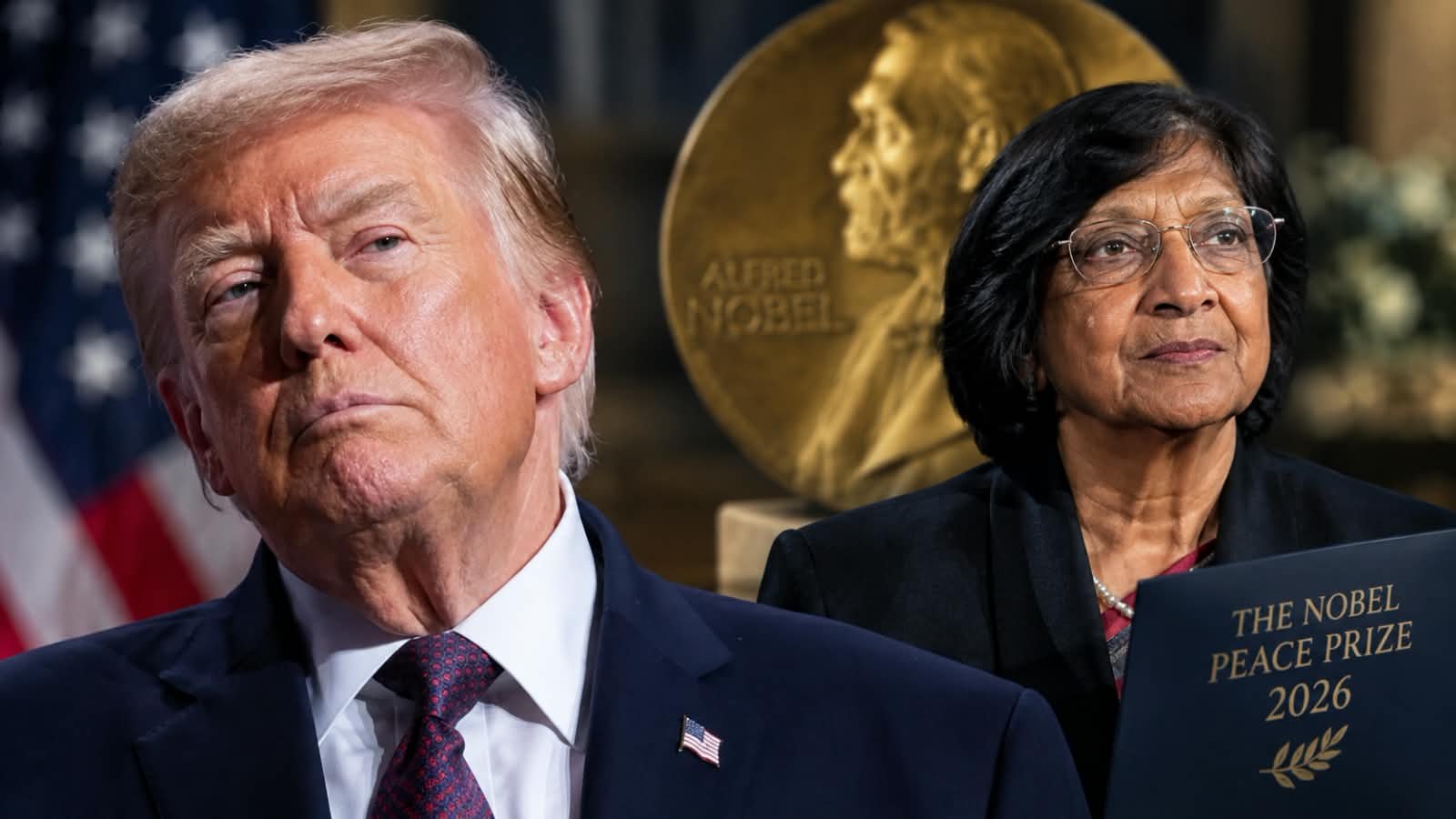
The announcement of the 2026 Nobel Peace Prize has sparked celebrations and renewed debate over the role of international justice, with US President Donald Trump expressing strong dissatisfaction after South African jurist Navanethem “Navi” Pillay was named the recipient. At 85, Pillay has been recognized for her longstanding efforts to bring those responsible for war crimes, crimes against humanity and genocide to justice, as well as her work to uphold international law.
According to Reuters, Trump criticized the decision while addressing an election rally in Syracuse, New York, on Friday. He described Pillay as an unfamiliar figure, claiming that he had never heard her name before, and directed much of his frustration toward Norway.
“This decision has left a stain on Norway that will never disappear,” Trump said, condemning the Nobel Peace Prize selection in unusually strong terms.
The US president also called the decision embarrassing and shameful, accusing what he described as people with extremist views of permanently damaging the reputation of the prestigious award. He further claimed that these individuals were opposed to democracy and hostile to civilization.
The Nobel Committee had announced Pillay as the 2026 Nobel Peace Prize laureate just hours before Trump’s remarks. Her selection recognizes a career devoted to international human rights and accountability, particularly efforts to ensure that individuals accused of serious international crimes face justice.
Pillay, a South African jurist of Indian Tamil origin, has held several prominent positions in international law. She served as a judge of the International Criminal Tribunal for Rwanda and later became the United Nations High Commissioner for Human Rights. Her work has contributed to international efforts to address human rights violations and strengthen legal accountability.
Trump’s reaction has attracted additional attention because he has repeatedly received public support for his own Nobel Peace Prize aspirations. Among those who have expressed support for his nomination is Pakistan’s Prime Minister Shehbaz Sharif, adding an international political dimension to the debate surrounding the award.
However, one important distinction remains: although the Nobel Peace Prize is presented in Norway, its recipient is selected by the Norwegian Nobel Committee, an independent body responsible for evaluating nominations and making the final decision. The Norwegian government does not directly select the laureate.
The controversy highlights the growing intersection of international recognition and political rivalry. While Pillay’s supporters view the award as an acknowledgment of decades of work in human rights and international justice, Trump’s criticism has shifted attention toward the political implications of the committee’s decision.
Ultimately, the debate raises a broader question about the meaning of international honours: whether recognition should be judged by political approval or by a recipient’s contribution to justice, accountability and peace.

