


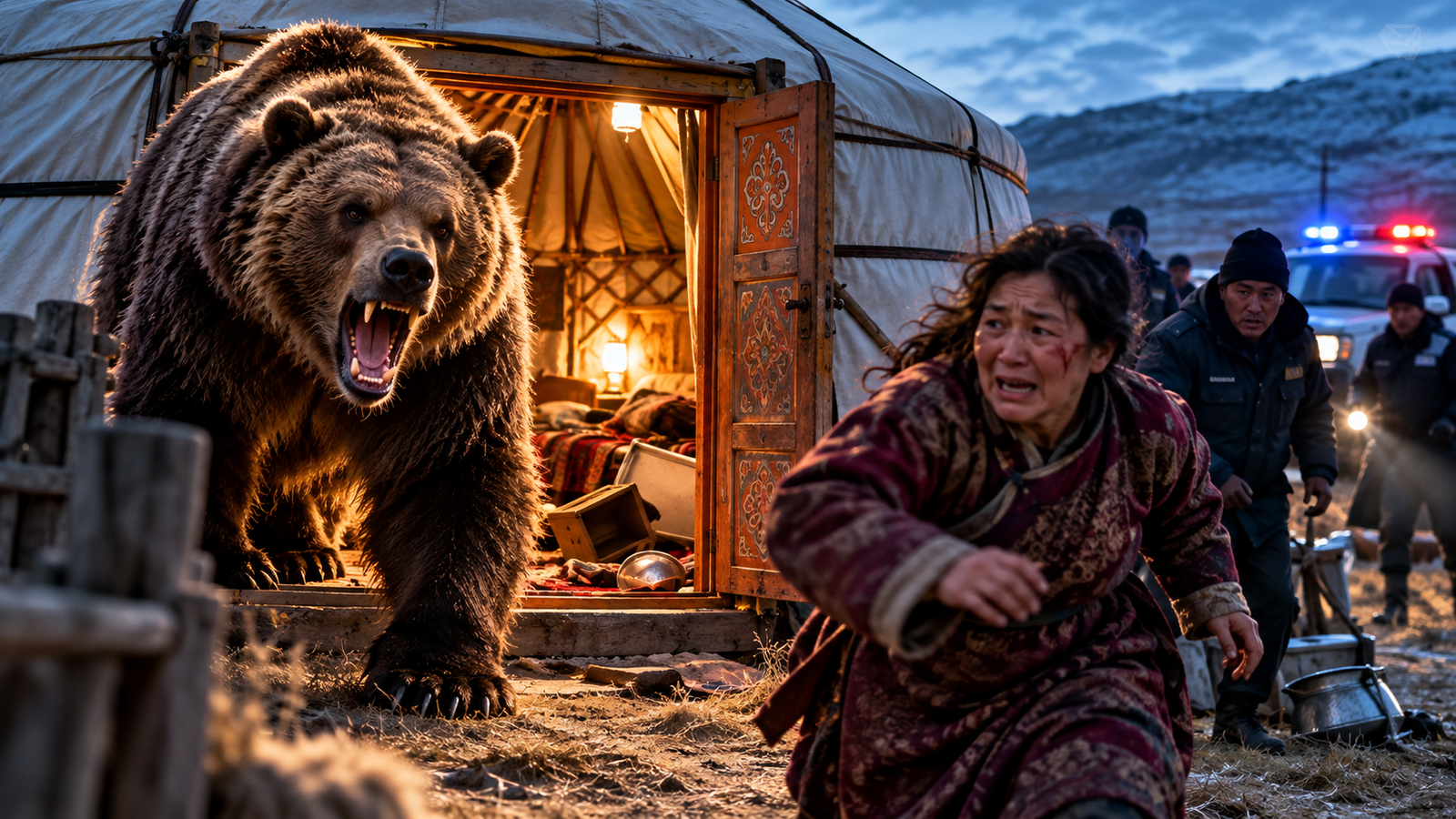
A deadly bear attack near Mongolia’s capital has highlighted a sharp rise in human-bear encounters, with officials warning residents to remain vigilant as wildlife increasingly moves closer to populated areas.
WEBDESK – MEDIABITES
A bear killed a man and seriously injured a woman after entering their home on the outskirts of Mongolia’s capital, Ulaanbaatar, authorities said Thursday.
The attack took place overnight Wednesday in the Bayanzurkh district, where the victims were inside a traditional Mongolian ger, a tent-like dwelling widely used by the country’s nomadic population. The man, who was in his 40s, died in the attack, while the woman, in her 50s, managed to escape and was taken to hospital. She was taken to hospital in serious condition.
Authorities have launched a search for the animal. A team of about 35 rangers has been deployed to locate the bear, while officials have urged residents to remain cautious and report sightings immediately.
Bear encounters surge
The incident comes amid a dramatic increase in bear sightings across Mongolia.
Officials said 24 bear sightings have been confirmed in Ulaanbaatar this year, compared with just two in 2018 and one in 2019. Across the country, authorities have recorded 754 sightings in 11 provinces and the capital in 2026. Around 80% involved cubs or female bears accompanied by cubs.
The rise has raised concerns about increasing contact between wildlife and communities, particularly in areas where homes and settlements are expanding into regions traditionally inhabited by animals.
Videos showing bears entering or damaging gers and attacking livestock have also circulated widely on Mongolian social media in recent weeks, according to reports.
Food shortages may be driving bears closer to people
Officials are investigating why bear sightings have increased so sharply. Possible factors include changing food availability, climate-related environmental changes and the expansion of human settlements.
A bear captured in Mongolia’s eastern Khentii province was found to have an empty stomach, according to an official from the Environment and Climate Change Ministry. Authorities subsequently banned the harvesting of nuts and berries in mountainous areas for the remainder of 2026, amid concerns about food shortages affecting wildlife.
The situation has prompted authorities to take additional measures. Bear-hunting permits have been issued across eight provinces, while officials are altranquilizerranquiliser dart guns to assist rangers working in rural areas.
A growing challenge for Mongolia
Mongolia has a large nomadic population, with many families traditionally living in gerkeepingaining livenearose to natural habitats. At the same time, more people are settling in urban and semi-urban communities, increasing the possibility of encounters between people and wildlife.
The deadly attack near Ulaanbaatar underscores the growing challenge: as food availability and environmental conditions change, animals that normally avoid humans may increasingly venture into populated areas.
Officials arw urging residents, particularly those living near forests and mountain valleys, to remain alert as rangers continusearchingch for the bear.
The attack also reflects a wider trend across parts of Asia, where authorities in countries including Japan have reported increasing bear sightings and attacks around towns and cities. Experts say the causes are complex and can include changing food supplies, climate-related environmental shifts and rural depopulation. CBS News
For Mongolia, however, the immediate priority is clear: finding the bear, protecting residents and understanding why encounters that were once rare are becoming increasingly common.

