


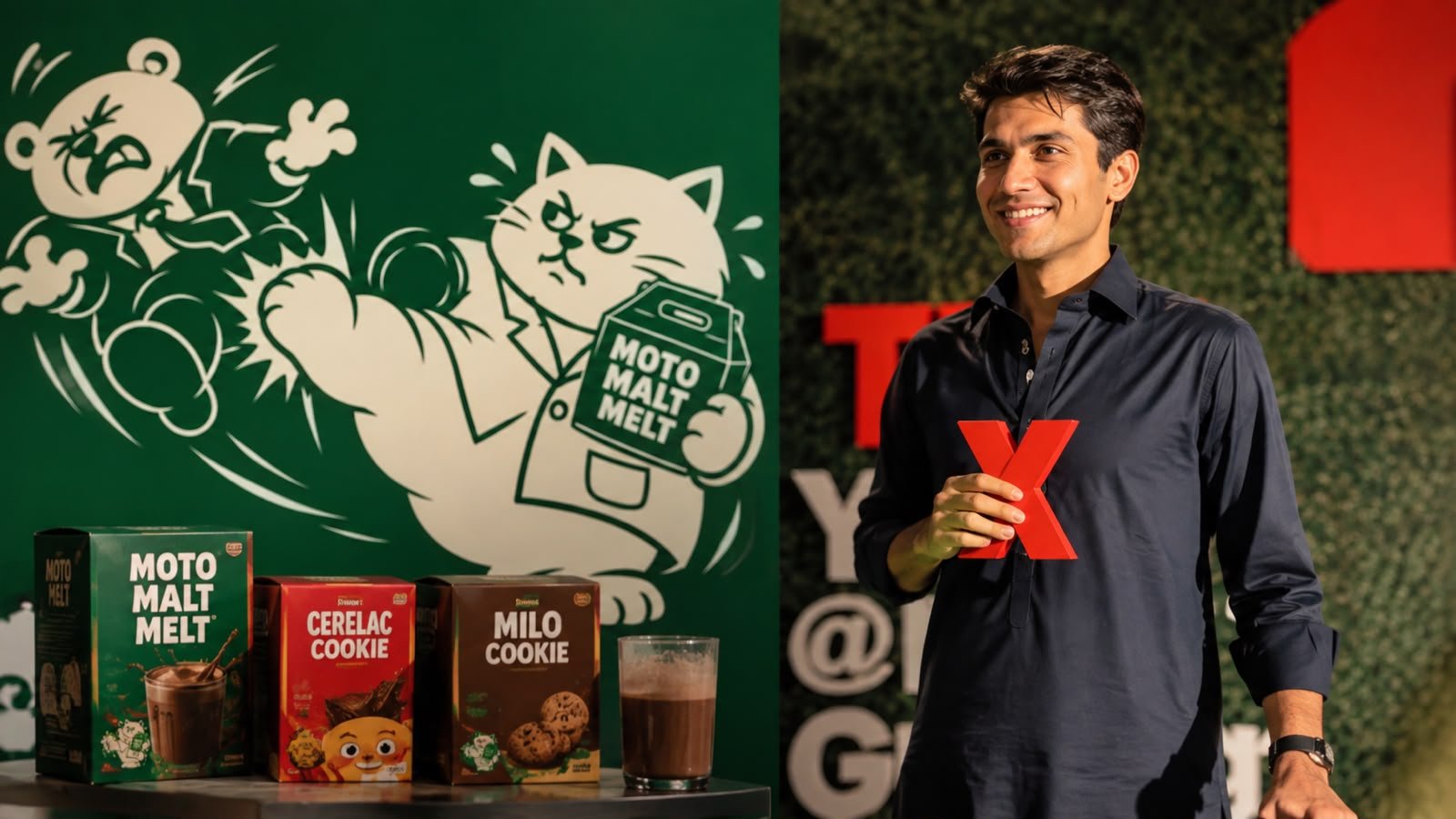
Pakistani entrepreneur Syed Murrad Gillani has announced a major change to his food businesses following a legal dispute with Nestlé over the use of its trademarks. Gillani, known for founding popular dessert and fast-food brands including Dezāto, Dumbo Donuts and FRIED, said his company will stop using Nestlé products as ingredients and discontinue product names containing “Milo” and “Cerelac.”
The decision comes after Société des Produits Nestlé S.A. issued a legal notice on September 23, raising concerns over the use of its trademarks. Rather than continuing with the disputed names, Gillani says his company has chosen to develop its own alternatives.
In an Instagram post, the entrepreneur revealed that his team had already developed its own malt powder. He said the product, previously associated with the name “MOTO MALT MELT,” has now been completely localised, with the company relying on its own malt, formulation and recipe.
Gillani also confirmed that two products, “CERELAC COOKIE” and “MILO COOKIE,” will be replaced with new names. He indicated that customers could see the new packaging within the next few days, signalling a rapid shift in the company’s product strategy.
What makes the development particularly notable is Gillani’s decision to move ahead even if Nestlé were to allow the continued use of the ingredient name. According to his statement, the company has decided that it will no longer depend on the multinational’s products or names.
“We still haven’t heard back from them. But I’ve made my decision,” Gillani said, making it clear that the dispute had prompted a broader rethink of the company’s approach to ingredients and branding.
The entrepreneur described the move as a step towards greater independence, stressing that his business would now focus on locally developed ingredients and formulations. His comments suggest that the dispute has become more than a question of product naming; it has pushed the company toward creating alternatives that it can control itself.
For consumers, the most visible change will likely be on menus, boxes and product labels, particularly for items that previously carried the “Milo” or “Cerelac” names. The taste and formulation of the replacement products will now be closely watched as the brands attempt to maintain customer interest while moving away from familiar names.
The dispute also highlights the importance of trademarks and brand names in Pakistan’s increasingly competitive food and beverage market. As Gillani’s businesses prepare for the transition, the bigger question is whether a locally developed alternative can successfully replace the recognition attached to established international brands.
For now, Gillani’s message is clear: his company is choosing localisation over dependency, turning a legal dispute into a significant branding and product-development shift.

