


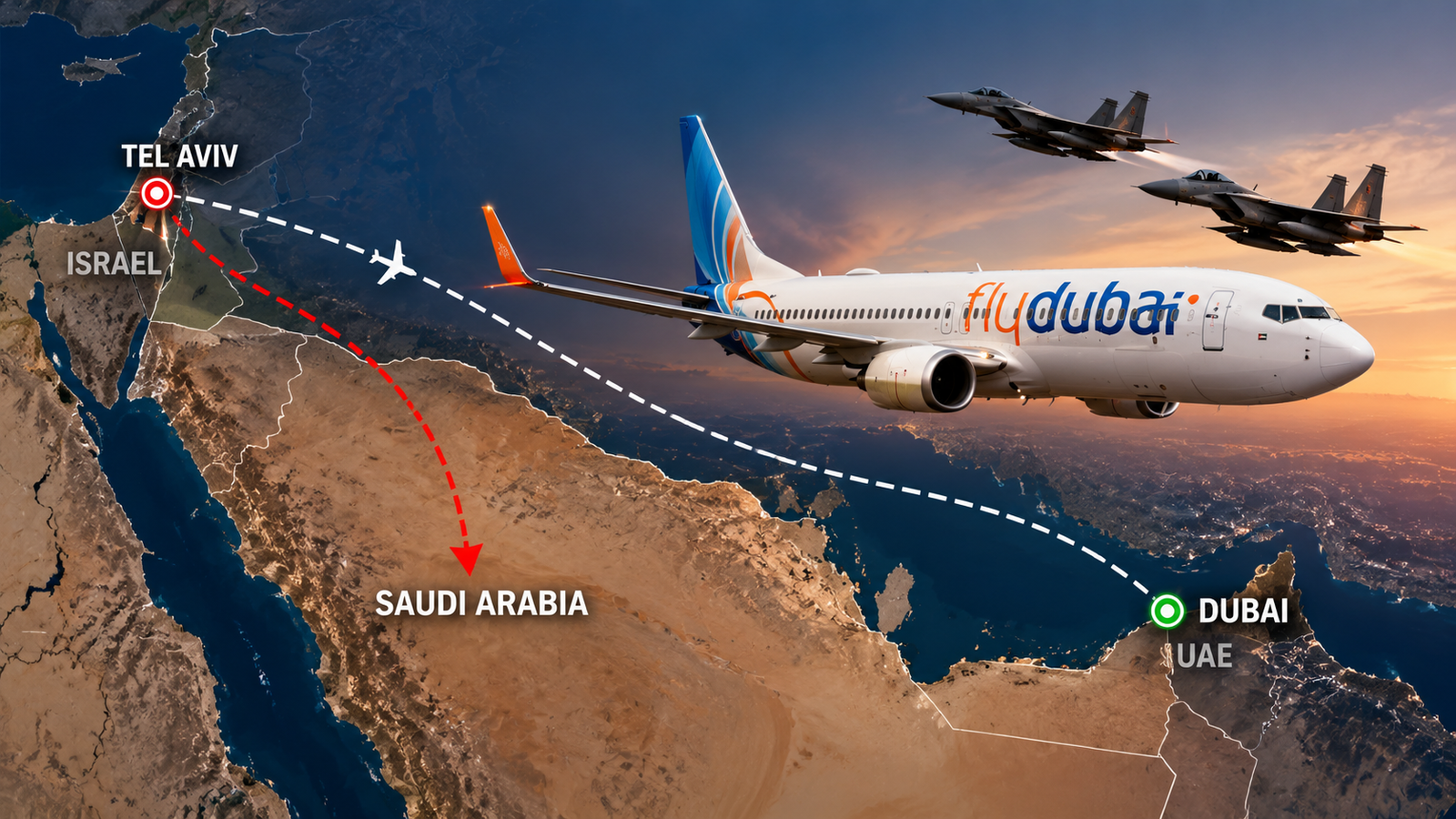
A Flydubai flight from Dubai to Tel Aviv sent a hijacking alert, diverted toward Saudi Arabia, and triggered an Israeli fighter jet response before officials said there was no confirmed hijacking.
WEBDESK – MEDIABITES – YENISAFAK
A Flydubai passenger flight traveling from Dubai to Tel Aviv triggered a major security response Wednesday after transmitting an emergency transponder code associated with a possible hijacking and subsequently diverting toward Saudi Arabia.
The aircraft, carrying more than 150 passengers, reportedly descended to an unusual altitude after the alert and changed course while en route to Tel Aviv. Israeli media reported that the incident prompted the scrambling of Israeli Air Force fighter jets as authorities worked to determine what had happened aboard the aircraft.
The flight was expected to land in Saudi Arabia after the diversion. Reports later indicated that the aircraft landed safely, although details surrounding the emergency remained under investigation.
Conflicting reports over hijacking
Initial reports described the transmission of a hijacking-related code as the aircraft was diverted. Aviation reporting indicated that the plane first transmitted the international emergency code 7700 before switching to code 7500, which is used to indicate unlawful interference or a possible hijacking.
However, Israeli officials subsequently cautioned against treating the incident as a confirmed hijacking.
A security source cited by Ynet said there was “no confirmed information about a hijacking” and that the pilot had activated a distress signal. Other Israeli sources told the outlet that the episode was likely not a security incident, although authorities were still trying to establish the circumstances.
The office of Israeli Prime Minister Benjamin Netanyahu also said the diversion was not believed to be a hijacking.
Israeli jets scrambled
The alert nevertheless triggered an immediate military response.
According to Ynet, two Israeli Air Force fighter jets were scrambled after the aircraft transmitted the emergency signal. Netanyahu and Defense Minister Israel Katz also convened an urgent security consultation as officials assessed the situation.
The response reflected the sensitivity surrounding commercial aviation routes in the region, particularly amid heightened security concerns and ongoing tensions across the Middle East.
Reports identified the aircraft as a Flydubai Boeing 737 operating a Dubai-to-Tel Aviv service. Some reports identified the flight as FZ1073, although flight-tracking information for Flydubai’s Dubai-Tel Aviv services shows multiple flight numbers operating the route.
What is known so far
The aircraft issued emergency signals, changed altitude and diverted toward Saudi Arabia. Israeli fighter jets were reportedly scrambled, while senior Israeli officials held an emergency security consultation.
What remains unclear is why the distress code was activated and what exactly occurred aboard the aircraft.
Importantly, there was no confirmed hijacking according to the Israeli Prime Minister’s Office and Israeli security sources cited in the initial reporting. The incident therefore remains a developing aviation and security story rather than a confirmed hijacking.
The episode also demonstrates how quickly an emergency transponder signal from a passenger aircraft can trigger military and governmental responses, particularly on a sensitive regional route.
Why it matters: Passengers were confronted with a serious aviation emergency that initially raised fears of a hijacking, while authorities moved rapidly to protect the aircraft before the suspected threat was ruled unconfirmed.
Updated: September 30, 2026. Details remain subject to change as authorities investigate the incident.

