


By Imran Malik | National Affairs & Health Desk | MediaBites.com.pk
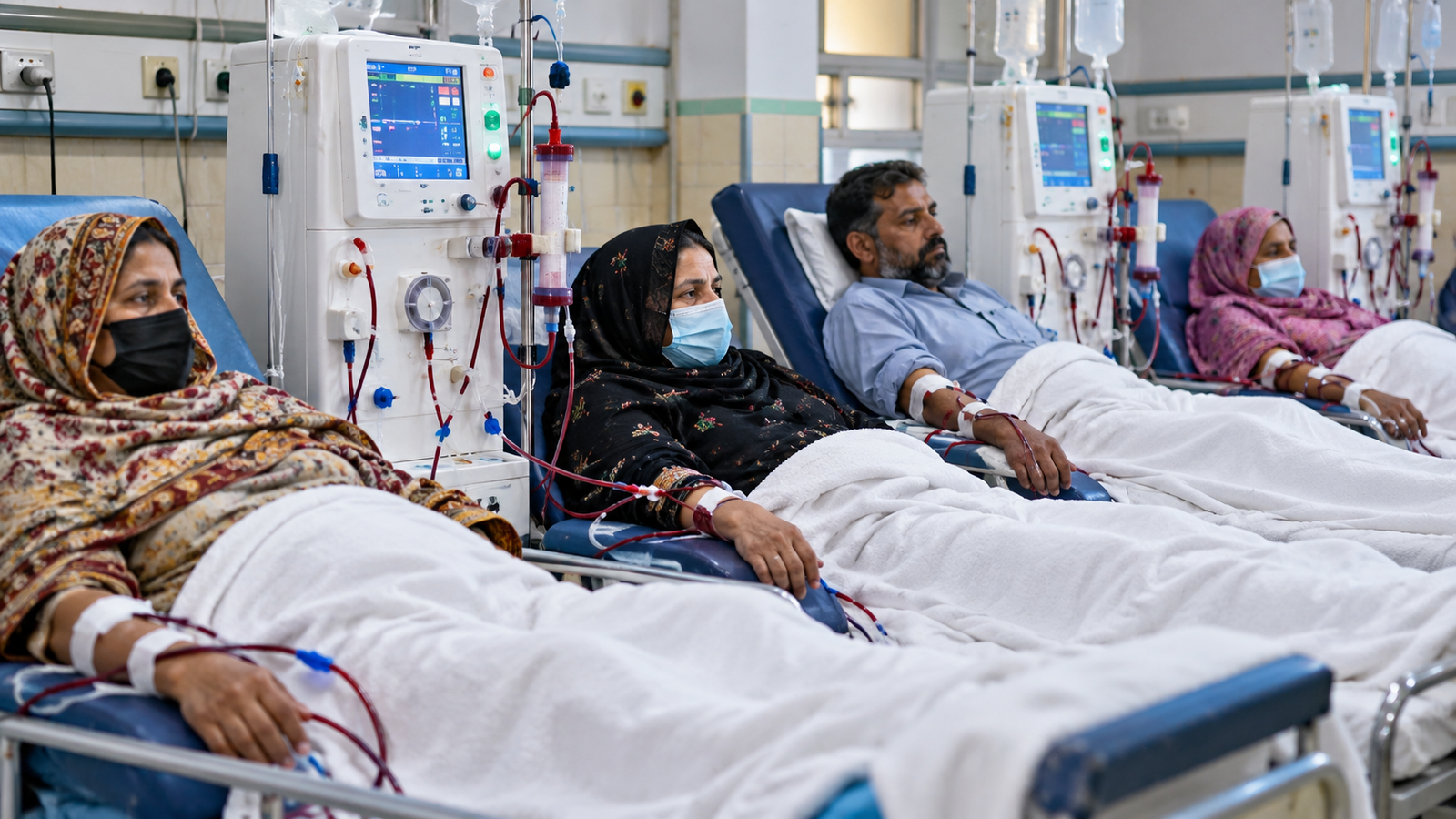
Four dialysis patients including three women have tested HIV positive at the Tehsil Headquarters Hospital in Mian Channu raising fresh concerns about infection control at Punjab healthcare facilities.
Four patients undergoing dialysis at the Tehsil Headquarters Hospital in Mian Channu have tested positive for HIV, raising fresh and deeply troubling concerns about infection control practices at healthcare facilities across south Punjab.
The patients, including three women, were receiving dialysis at the facility when they tested positive for the virus. The hospital administration has referred all four to Nishtar Hospital Multan for further medical evaluation and treatment where they are currently under care.
Hospital officials told media that more than 60 patients are currently receiving dialysis at the facility and maintained that HIV cannot be transmitted through the dialysis process itself. They said they were assessing the situation.
Sources, however, told Dawn that more dialysis patients may also have tested positive but officials did not confirm additional cases. That gap between what officials confirm and what sources report is itself a deeply familiar and deeply troubling pattern in Punjab’s recurring HIV healthcare crises.
A Province That Has Been Here Before — Too Many Times
This is not the first time. It is not the second time. It is part of a pattern of HIV infections in Punjab’s healthcare settings that has now stretched across multiple years, multiple hospitals and multiple communities with heartbreaking human consequences.
In November 2024 approximately 30 kidney patients at Nishtar Hospital Multan were reported to have contracted HIV during dialysis. One patient died after developing complications. A Punjab government fact-finding committee confirmed an HIV outbreak in the hospital’s nephrology unit and identified clear violations of dialysis guidelines and standard operating procedures.
A scientific study published in 2026 by researchers from the Aga Khan University and the Punjab AIDS Control Programme found that the Multan dialysis cases were closely linked and provided evidence that infections originated within the healthcare setting itself. The Punjab government ordered proceedings under the PEEDA Act against senior officials and medical staff over alleged negligence and mismanagement in January 2025.
In March 2025 an even more devastating crisis emerged in Taunsa where 106 children tested HIV positive and were registered with the AIDS Control Programme. The government established a screening and treatment centre and ordered action against senior local health officials. A joint mission involving WHO, UNICEF, UNAIDS and other partners subsequently carried out door-to-door screening of approximately 50,000 people in the affected area. Auto-disable syringes were supplied to government hospitals and hundreds of clinics allegedly run by unlicensed practitioners were sealed.
The National Picture — 84,421 Registered Cases
The scale of Pakistan’s HIV challenge is reflected in national figures that demand urgent and sustained attention.
The National AIDS Control Programme reports that 84,421 HIV cases were registered in Pakistan by December 2025, of whom 60,785 were receiving antiretroviral therapy at 98 centres across the country.
The Punjab AIDS Control Programme provides free HIV testing, counselling, treatment, diagnostic services and follow-up care through treatment centres established in districts including Lahore, Multan and Dera Ghazi Khan. More than 14,000 patients are currently receiving free treatment through the programme.
These numbers represent real human beings. Patients who trusted Pakistan’s healthcare system with their lives and in too many documented cases contracted a life-altering virus inside the very facilities meant to heal them.
The Height of Negligence
The phrase that most accurately describes what is happening across south Punjab’s healthcare facilities is not a medical term. It is a moral one.
Dialysis is a life-sustaining procedure for kidney patients who have no other option. These patients are among the most medically vulnerable in any society. They attend hospitals regularly, sometimes multiple times per week, placing their lives in the hands of medical professionals and the sterility of medical equipment.
When those patients leave a dialysis session with an HIV infection they did not have when they arrived, something has gone catastrophically wrong. Equipment has not been properly sterilised. Protocols have not been followed. Guidelines have been violated. And lives have been permanently altered.
The Mian Channu cases are the latest chapter in a story that Punjab’s health authorities have had ample warning, ample time and ample evidence to address decisively. The fact that dialysis patients are still contracting HIV in Punjab’s government hospitals in 2026, after Nishtar in 2024, after Taunsa in 2025, is not a medical mystery.
It is the height of negligence. And someone must be held accountable.
What Must Happen Now
The Mian Channu hospital must immediately conduct comprehensive HIV testing of all 60 plus dialysis patients currently receiving treatment at the facility. The results must be made public without delay.
An independent inquiry must be constituted immediately to determine how these infections occurred, who was responsible for maintaining infection control protocols and whether those protocols were followed.
The PEEDA Act proceedings ordered after the Nishtar Hospital outbreak must be concluded with consequences that are serious enough to deter future negligence. Proceedings that are ordered and never completed are not accountability. They are theatre.
And Pakistan must have an honest national conversation about the state of its government healthcare facilities where the most vulnerable patients are repeatedly contracting preventable infections.
Four more patients. Three of them women. All of them dialysis patients who went to a government hospital for treatment and came away with HIV. Pakistan cannot keep letting this happen.
— Imran Malik | National Affairs and Health Desk | MediaBites.com.pk | Southera.com
Source: Dawn, Punjab AIDS Control Programme, National AIDS Control Programme
Note: If you or someone you know has been affected by HIV or requires testing and counselling, the Punjab AIDS Control Programme provides free services at centres in Lahore, Multan and Dera Ghazi Khan. The National AIDS Control Programme operates 98 antiretroviral therapy centres across Pakistan.


1 Comment
Mình có trải nghiệm qua fly 88, thấy giao diện khá dễ thao tác.