


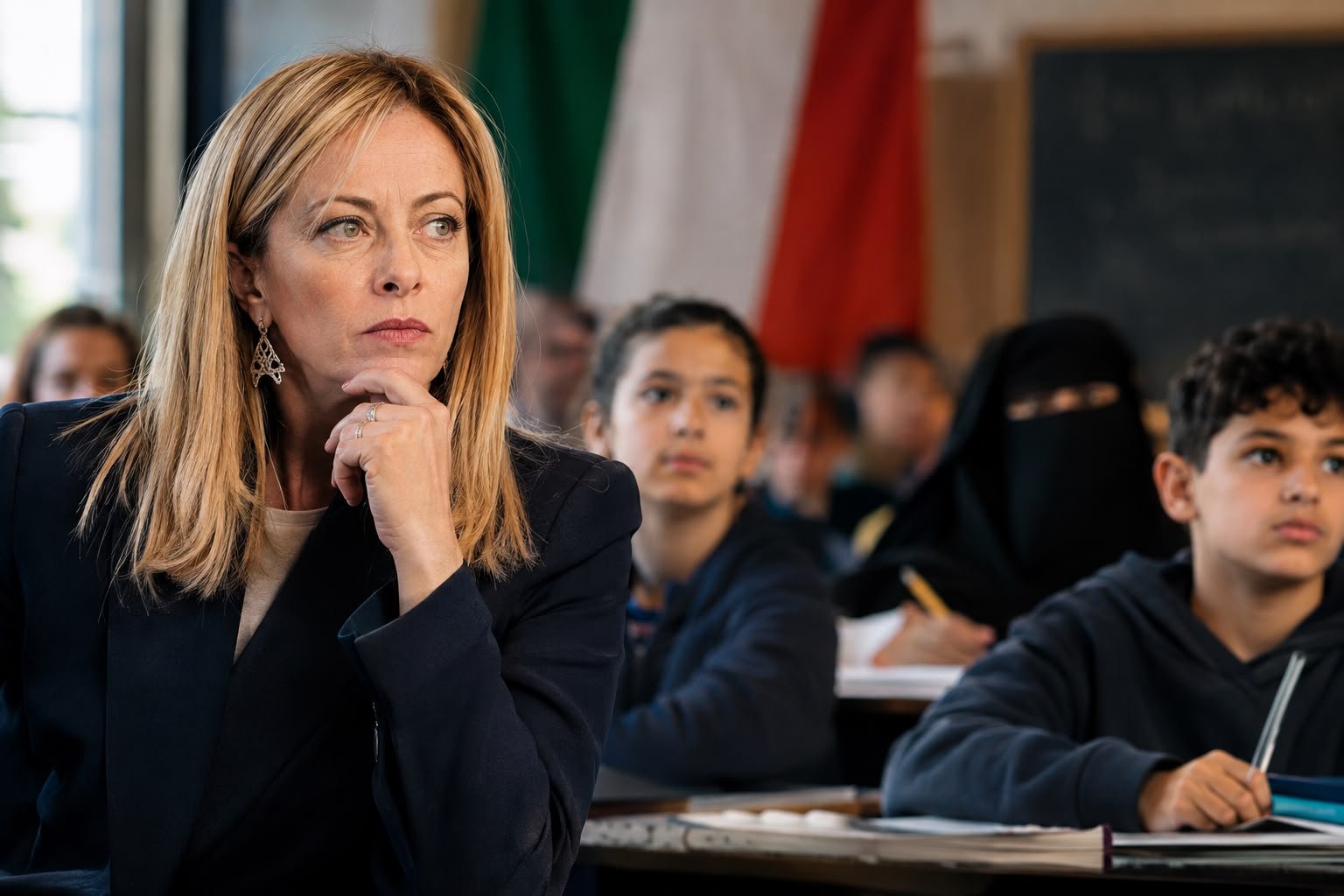
ROME — September 25, 2026: Italy’s government has approved new measures that will limit the number of newly arrived students with insufficient Italian-language skills in classrooms and ban burqas and niqabs in schools.
The decree, approved by Prime Minister Giorgia Meloni’s cabinet on Thursday, introduces a 30% limit for students who do not have an adequate command of Italian in individual classrooms. The government says the measure is intended to improve language learning and integration and prevent classrooms from becoming isolated communities.
The new rules are expected to take effect from the 2027–28 school year. Education Minister Giuseppe Valditara said the measure would affect about 1,000 classrooms, representing roughly 0.3% of classrooms nationwide. Students who were born and raised in Italy, attended at least two years of nursery school there, or completed three years of schooling in the country will be exempt.
The decree also prohibits students from wearing full-face coverings, including the burqa and niqab, inside schools. Violations could result in fines of up to €1,000, according to the draft provisions.
Another part of the policy focuses on parents. In cases where children face persistent difficulties integrating or learning Italian, their parents may be referred to social services and required to attend free Italian-language and literacy classes. Failure to comply could lead to financial penalties.
Meloni has defended the measures as necessary for integration. She described them as measures designed to help students learn Italian while ensuring that schools remain inclusive. In a statement following the cabinet decision, she said the government wanted to prevent the creation of what she called “ghetto classrooms.”
However, the policy has drawn criticism from opposition politicians, rights campaigners and education advocates. Critics argue that the measures could create divisions between students and disproportionately affect children from migrant backgrounds. Save the Children Italy warned that the policy could create different categories of students, according to the Guardian.
The timing of the announcement has also attracted political attention. Italy is expected to hold general elections in 2027, and migration and integration remain major issues in the country’s political debate. Critics have therefore linked the government’s tougher language on immigration and schools to the approaching election, although the government says its focus is on improving integration and educational outcomes.
The new measures are now set to become part of Italy’s wider debate over immigration, education, cultural identity and how schools should support children from different backgrounds.

