


By Imran Malik | World Affairs & Media Industry Desk | MediaBites.com.pk | NJNewsline.com
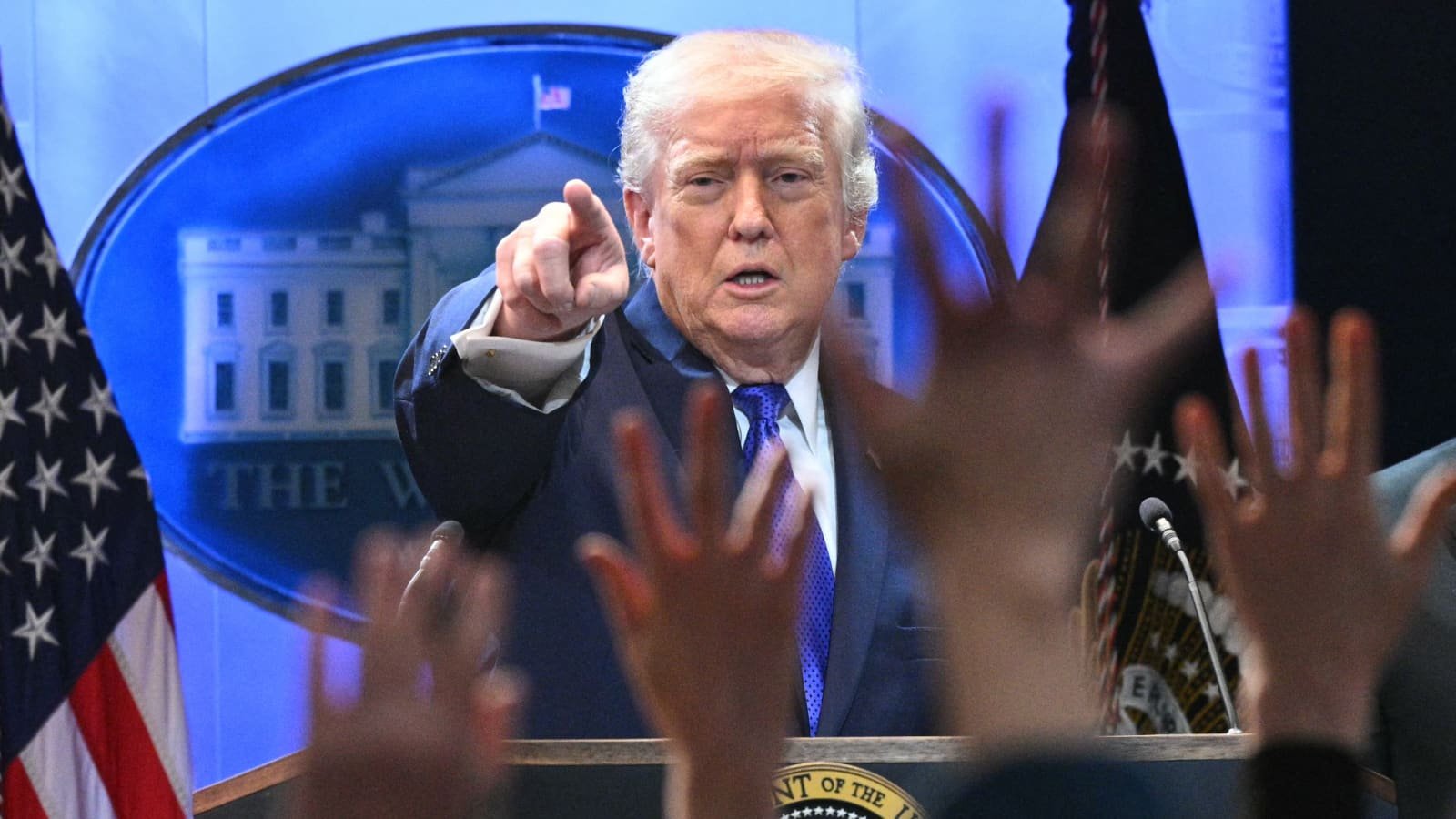
President Donald Trump announced the banning of CNN MSNBC and Politico from the White House effective immediately calling their coverage fake news in what First Amendment experts call unconstitutional viewpoint discrimination.
The most powerful man in the world declared war on three of America’s most-watched and most-read news organizations on Friday. He did it from the Oval Office with the casual confidence of someone who has been testing the limits of press freedom for a decade and has not yet found a limit that stopped him.
President Donald Trump announced on Truth Social around 3 PM Eastern that he was banning CNN, MSNBC, and Politico from the White House “effective immediately” — citing what he called their constant reporting of “FAKE NEWS.”
“Media Outlets shouldn’t be able to constantly write or report FICTION and LIES when they’re covering the President of the United States, the Trump Administration, or the United States of America,” Trump wrote. “Other Fake News Media Outlets to follow.”
The Chaos Behind the Announcement
What made Friday’s declaration particularly alarming was not just what Trump said but what happened immediately after he said it.
Even some White House staffers were caught off guard by the announcement, including members of the press shop, who were left scrambling to learn what it actually meant for daily operations. No formal action had been taken to implement the ban by Friday evening. CNN reporters remained at their White House workspace. A CNN team was also traveling with Vice President JD Vance as the assigned television pool reporters.
When asked by reporters in the Oval Office to justify banning three news organizations, Trump offered no specific story and no specific policy.
“Because they’re fake news,” he said.
When asked what the ban would look like, he provided no procedural details.
“It’s a very simple ban. I don’t want them in my office. I don’t want them here. I would say the ban would go as far as you can,” he said.
Asked why he announced it specifically on Friday, he said, “No reason.”
First Amendment Experts — This Is Unconstitutional
The country’s leading First Amendment organizations were immediate and unambiguous in their response.
Bruce D. Brown, president of the Reporters Committee for Freedom of the Press — the same organisation on whose exorganizationittee MediaBites’s member ONA USA colleague Tom Rubin of OpenAI sits — told CNN directly: “A ban like this would be flatly unconstitutional. The First Amendment is clear that once the White House invites in some journalists, it can’t ban others because it doesn’t like their reporting. This is textbook viewpoint discrimination and will be quickly struck down by the courts if challenged.”
Aaron Terr, public advocacy director at the Foundation for Individual Rights and Expression, framed the principle with precision: “Press credentials aren’t a reward for loyalty to the government. A free, even adversarial, press is a sign of our country’s strength.”
CNN stated clearly: “CNN stands fully behind our White House team and their fair and accurate reporting. We have a right under the US Constitution to do that reporting without hindrance or interference from the government. Should the ban which President Trump threatened go ahead, it would be an illegal assault on that fundamental and constitutionally-protected right.”
Politico added: “POLITICO will continue to fairly report on this White House and future ones. We will vigorously defend our First Amendment rights against any attempt to restrict them.”
A Pattern, Not a Moment
This is not the first time. It is the latest episode in a sustained decade-long campaign by Donald Trump against independent journalism.
During his first term Trump’s White House revoked the press credentials of CNN’s then-chief White House correspondent Jim Acosta following a contentious exchange at a November 2018 press conference. CNN sued. A Trump-appointed federal judge temporarily restored Acosta’s access, ruling that the White House had violated his due process. The White House eventually reinstated the credentials permanently, and CNN dropped its lawsuit.
In 2025, the White House briefly banned the Associated Press from the press pool, prompting a separate legal battle. AP reporters and photographers had their access restored, and that lawsuit remains ongoing.
The Trump administration’s relationship with the press follows a consistent pattern. Announce a restriction. Implement it chaotically or incompletely. Face legal challenge. Retreat or modify under court pressure. Repeat with a new target.
The targets escalate each time.
What Trump Said About Other Outlets
Trump did not limit his threats to CNN, MSNBC and Politico.
“There may be others to join them,” he said during the Oval Office session, at one point citing The New York Times and The Washington Post, calling both newspapers “crummy.”
The implied threat is significant. If the ban on CNN, MSNBC and Politico stands without a successful legal challenge, the precedent creates the mechanism to alude any outlet whose coverage displeases the administration.
Trump also offered the outlets a path back. The ban could be lifted if they “could straighten themselves out” and publish more favourable coverage.
The Democratic Response
Numerous Democratic lawmakers condemned the announcement with some drawing explicit historical parallels.
Senate Minority Leader Chuck Schumer wrote on social media: “Donald Trump just did what dictators throughout history have done. This is a democracy. You will not be able to manipulate the news or hide the truth.”
The White House Correspondents’ Association, which represents the entire White House press corps, issued a statement expressing solidarity with the targeted outlets.
The Bigger Picture — Press Freedom in the Trump Era
Pakistan’s journalists and media professionals watching this story from across the world should recognise the pattern. Recognition of “fake news.” The selective denial of access. The demand for favourable coverage in exchange for institutional engagement. The use of presidential authority to punish critical reporting rather than rebut it.
These are not American problems. They are global ones. And they are being normalised at the highest level of the world’s oldest and most powerful democracy.
Trump’s statement on Friday — “Something is wrong with a country that can allow people to write purposely negative stories” — is the most revealing sentence he has spoken about press freedom in ten years of attacking it.
A country where the president decides which stories are permissible is not a democracy with a press freedom problem. It is a democracy in the process of becoming something else.
The courts stopped him with Acosta. The courts stopped him with AP. The courts will likely stop him again.
But each time the line moves a little further. And the willingness to test it grows a little bolder.
That is the story. And it is not finished.
— Imran Malik | World Affairs and Media Industry Desk | MediaBites.com.pk | NJNewsline.com
Sources: CNN, Politico, Truth Social, Reporters Committee for Freedom of the Press, White House Correspondents’ Association


3 Comments
Understanding the wild card twists in follow the queen poker rules adds a whole new level of excitement to friendly poker nights.
That was a really clever strategy for finishing the new york times daily sudoku grid.
That helpful hint starsx explanation really cleared up my confusion on row placement.