


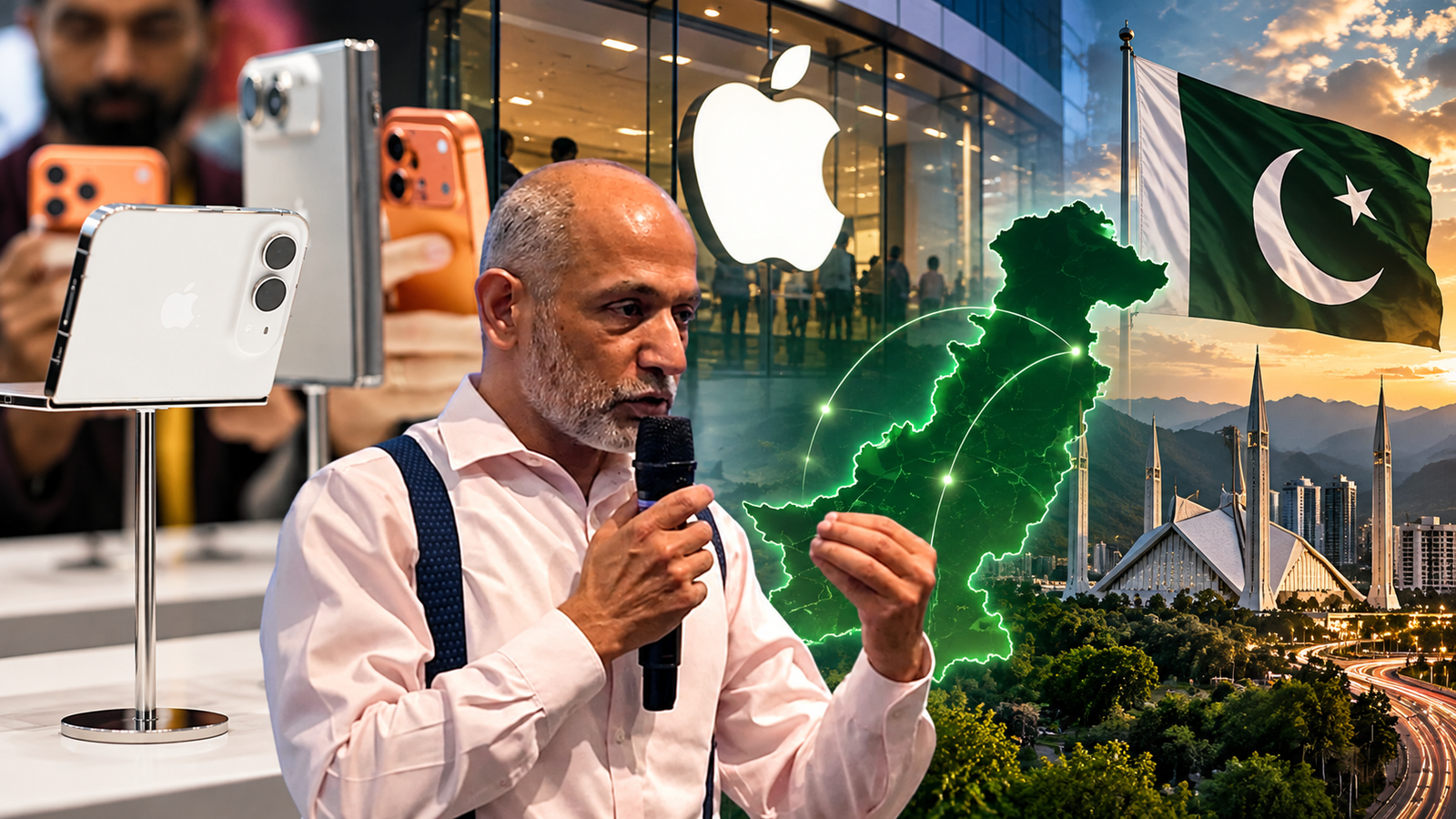
Apple’s appointment of Salman Dar as its first head of government affairs in Pakistan signals deeper engagement, but does not yet confirm local iPhone manufacturing or a full market launch.
WEBDESK – MEDIABITES
Apple’s decision to appoint technology industry veteran Salman Dar as its Head of Government Affairs – Pakistan has sparked fresh speculation about whether the US technology giant is preparing for a larger presence in the country.
Dar announced the appointment on LinkedIn, saying he would lead Apple’s government affairs work in Pakistan and support the company’s engagement with regulators, policymakers and other key stakeholders.
The appointment is significant because it gives Apple a dedicated government-affairs presence focused specifically on Pakistan at a time when Islamabad is actively seeking greater investment from major global technology companies.
But it is important to distinguish between stronger government engagement and an actual commercial or manufacturing launch.
READ MORE: Apple appoints Salman Dar as Head of Government Affairs for Pakistan
What does a government affairs head do?
Government affairs executives typically act as a bridge between multinational companies and governments. Their work can involve engagement with regulators, ministries, policymakers and other public-sector institutions on issues such as taxation, market access, regulations, digital policy, imports and investment.
For Apple, such a role could help the company better understand Pakistan’s regulatory environment and communicate its concerns or priorities to policymakers.
It does not, by itself, mean Apple has decided to establish an iPhone factory, assembly plant, retail network or a full-scale commercial operation in Pakistan.
Why is Apple’s appointment happening now?
The timing is particularly notable because Pakistan has recently stepped up its efforts to attract Apple into its mobile phone manufacturing ecosystem.
The National Assembly Standing Committee on Information Technology and Telecommunication was told on Sept. 10 that negotiations were underway to encourage Apple to enter Pakistan’s manufacturing market. Engineering Development Board CEO Hammad Mansoor also said officials were exploring a meeting between Prime Minister Shehbaz Sharif and Apple CEO John Ternus during the premier’s upcoming visit to the US.
Pakistan’s domestic mobile-phone manufacturing sector has also expanded significantly. Officials told the parliamentary committee that 37 companies are currently manufacturing mobile phones in Pakistan and more than 35 million handsets have been produced locally. Apple remains the major smartphone company without local manufacturing operations.
The government hopes to attract more international companies to increase investment, create jobs, expand technology transfer and strengthen Pakistan’s electronics manufacturing base.
What does the Salman Dar appointment tell us?
Federal IT and Telecommunication Minister Shaza Fatima Khawaja welcomed Dar’s appointment, describing it as Apple’s first entry into Pakistan through the appointment of a head of government affairs.
Khawaja said government engagement with Apple over the past two years, combined with Pakistan’s evolving digital landscape, had begun to produce results. She also thanked Omar El Rifai, Apple’s director of government affairs for the Middle East and Pakistan, for his role in the engagement.
That suggests the appointment is part of a broader relationship-building process rather than an isolated corporate hiring decision.
However, there is currently no publicly announced agreement confirming that Apple will manufacture iPhones in Pakistan. The government’s efforts and ongoing discussions demonstrate interest, but the final investment decision rests with Apple.
Who is Salman Dar?
Dar brings more than three decades of experience in technology, business development, entrepreneurship and policy engagement across international markets. His professional background also includes involvement with the Pakistan IT Industry Association (P@SHA), where he served on its Central Executive Committee and worked on policy and regulatory matters.
His appointment therefore places an experienced Pakistani technology-sector figure at the center of Apple’s government and regulatory engagement with Islamabad.
So, is Apple coming to Pakistan?
Possibly — but it is too early to say that Apple is officially launching manufacturing or a major commercial operation.
The appointment of Salman Dar is a significant development because it establishes a dedicated government affairs role for Pakistan. Combined with ongoing government efforts to attract Apple and the possibility of a Shehbaz Sharif–John Ternus meeting, it points to closer engagement than Pakistan has previously seen.
The next major signal will be whether those discussions translate into a formal investment, manufacturing or assembly agreement.
For now, the most accurate conclusion is simple: Apple is getting more deeply involved in Pakistan’s policy conversation, but the iPhone factory is not here yet.

