


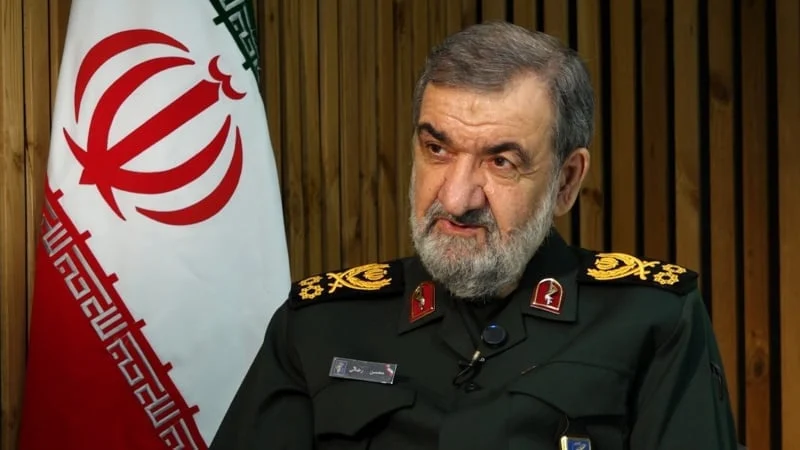
Iran has appointed former Revolutionary Guard commander and hardliner Mohsen Rezaee as secretary of its Supreme National Security Council as Tehran says an Oman shipping deal is very close to completion.
By Imran Malik | World Affairs & Security Desk | MediaBites.com.pk
At a moment when every signal from Tehran matters, Iran has just sent a significant one. And it has nothing to do with diplomacy.
Iran has appointed Mohsen Rezaee as the new secretary of the Supreme National Security Council, reshaping its top national security leadership precisely when the world is watching for signs of flexibility over the Strait of Hormuz.
The appointment of a man with Rezaee’s background sends a message that Gulf governments, Washington and global energy markets will be reading very carefully.
Who Is Mohsen Rezaee?
Rezaee is not a diplomat. He is not a technocrat. He is one of the most hardline figures in Iran’s security establishment.
He served as Commander of Iran’s Islamic Revolutionary Guard Corps for 16 years from 1981 to 1997, overseeing its transformation from a revolutionary militia into one of the Middle East’s most powerful military organizations. He has been a persistent and vocal advocate for advancing Iran’s nuclear program. He has run for Iran’s presidency multiple times and carries significant weight in both security and political circles.
He is also subject to an Interpol Red Notice in connection with the 1994 bombing of the AMIA Jewish community center in Buenos Aires that killed 85 people — charges Iran has consistently denied.
Why This Appointment Matters Now
The Supreme National Security Council is Iran’s apex body for national security policy. Its secretary is one of the most consequential positions in Iranian governance.
Iranian Foreign Minister Abbas Araghchi said over the weekend that the proposed Oman agreement on Hormuz shipping was “very close” — while simultaneously ruling out direct negotiations with Washington. Messages between the two sides are currently being exchanged only through intermediaries.
Iran’s demands for fully reopening Hormuz remain sweeping — lifting of the US naval blockade, withdrawal of American forces, removal of all sanctions, release of frozen Iranian assets, and compensation for war damage.
Appointing Rezaee suggests those demands are not softening. It signals Tehran intends to hold its position firmly regardless of economic pressure.
Iran’s Economic Crisis — And Washington’s Bet
Iran’s inflation has reached 77% year on year — devastating for ordinary citizens already suffering from shortages caused by the Hormuz closure.
President Trump told Axios that Washington was “low-keying it” and only “semi-negotiating” while monitoring Iran’s worsening economic conditions — betting that pressure will eventually force concessions.
Rezaee’s appointment suggests Tehran is betting differently.
Oil Markets and the Khamenei Question
Brent crude rose 0.9% to $84.30 a barrel, extending a three-session gain of more than 5% as markets reacted to the uncertainty.
Even if Iran and Oman finalize the shipping arrangement, it requires approval from Supreme Leader Mojtaba Khamenei — who has not appeared publicly since the conflict began on February 28.
Rezaee’s appointment introduces one more variable into already delicate negotiations. The Hormuz deal may be close. But with a hardliner now leading Iran’s supreme security body, close and finalized remain meaningfully different things.

