


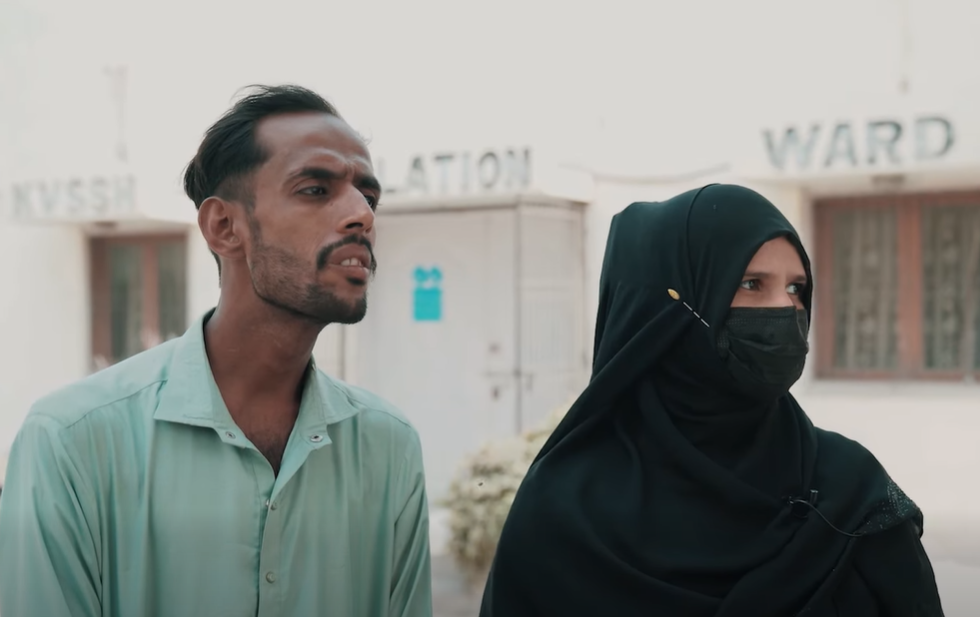
Over 130 children linked to Karachi’s Kulsoom Bai Valika Hospital HIV outbreak face devastating social stigma — expelled from schools, evicted from homes, and isolated from friends as families battle both disease and discrimination.
By Imran Malik | Health & Society Desk | MediaBites.com.pk News Courtesy: Kehkashan Bukhari, Digital Journalist, Geo News
When Geo News journalist Kehkashan Bukhari went to cover Karachi’s growing HIV outbreak linked to Kulsoom Bai Valika Hospital, she expected to find families fighting for medical treatment. What she found was something far more heartbreaking.
She found families fighting on two fronts simultaneously — against a devastating virus and against their own communities.
One child was expelled from school. Another family was asked to leave their rented home. A father told her his daughter now spends most of her time alone because other children are no longer allowed to play with her.
“This wasn’t just a health crisis,” Bukhari wrote. “No child deserves to lose their education, home, or childhood because of misinformation.”
The Scale of the Outbreak — Alarming and Growing
At least 130 people, most of them children, have tested HIV-positive in connection with the outbreak at Kulsoom Bai Valika Hospital, a government-run Sindh Employees’ Social Security Institution facility in Karachi, with officials confirming the number has risen sharply in recent weeks.
Sindh Labor Minister Saeed Ghani confirmed that more than 10,500 people were screened in and around the hospital, resulting in 120 HIV-positive diagnoses. A subsequent screening drive at another SESSI facility in Karachi’s Landhi area identified 10 additional cases, bringing the confirmed total above 130.
Six children affected by the outbreak have died.
The Pakistan Medical Association warned in April that 329 of the 894 HIV cases recorded in Sindh during the first quarter of 2026 involved children, describing the figures as merely the tip of the iceberg.
How Did This Happen
The crisis at Kulsoom Bai Valika Hospital first came to public attention in November 2025, when residents of Karachi’s SITE Town noticed a cluster of infections among children treated there.
Authorities have suspended two doctors, Dr Amanullah Memon and Dr Huma Aman, and removed a dispenser after 78 children treated at the hospital tested HIV-positive. Show-cause notices have also been issued to 37 staff members as inquiries and court proceedings continue. The inquiry committee held both doctors responsible for negligence, maladministration, and breaches of medical protocols.
The alleged reuse of contaminated syringes is believed to be the primary cause of the outbreak, though investigations are continuing.
Stigma — The Second Crisis Nobody Prepared For
The medical crisis is being managed, however imperfectly. The social crisis was not anticipated at all.
Kehkashan Bukhari’s ground reporting from Pathan Colony, where many of the affected families live, reveals a community torn apart not by the virus itself but by ignorance about how HIV actually spreads. Children who contracted the virus through contaminated hospital equipment — through no fault of their own or their families — are being treated as social pariahs by the same communities they grew up in.
A child expelled from school because other parents are afraid. A family was evicted from their home because their landlord panicked. A little girl whose friends no longer play with her because their parents have forbidden contact.
None of this has any basis in medical reality. HIV does not spread through casual contact, shared classrooms, or childhood play. These families are paying an enormous social price for a public health failure that was not of their making.
Expert Voices — Dignity, Not Discrimination
Bukhari’s reporting included important contributions from two credible voices on HIV awareness and treatment.
Zulfiqar Ali Bhutto Jr. spoke to her about his campaign for HIV awareness, acknowledging the critical role that public education plays in preventing the kind of devastating social stigma these families are experiencing.
Dr Faisal Mahmood of Aga Khan University Hospital (AKUH) explained how HIV spreads and why people living with HIV deserve dignity rather than discrimination — a message that needs to reach every school, every community, and every landlord in Karachi’s affected neighborhoods.
Government Response — Funds Committed, Accountability Underway
The Sindh government approved a Rs2 billion endowment fund to provide long-term medical treatment, rehabilitation, and welfare support for the affected children, marking the most significant relief package announced since the outbreak came to light.
Show-cause notices were issued to 10 individuals in connection with the HIV case at Valika Hospital, and 37 employees specifically named by the inquiry committee were suspended.
Minister Ghani announced that cases would be registered against those found guilty of negligence.
Money and accountability proceedings are important. But they cannot restore a child’s place in her classroom, a family’s home, or a little girl’s circle of friends.
What Must Happen Now
Pakistan’s response to this outbreak must be twofold. The medical response — treatment, screening, accountability for negligence — is underway and must continue with full urgency.
But an equally urgent public health communication campaign must now address the social stigma that is compounding these children’s suffering. Community leaders, school administrations, religious figures, and local media must collectively and loudly communicate one simple, evidence-based message: HIV does not spread through everyday contact with children, classmates, or neighbors.
Every child expelled from school, every family evicted from their home, every little girl sitting alone because misinformation has frightened her friends away — represents a failure that medicine alone cannot fix.

