


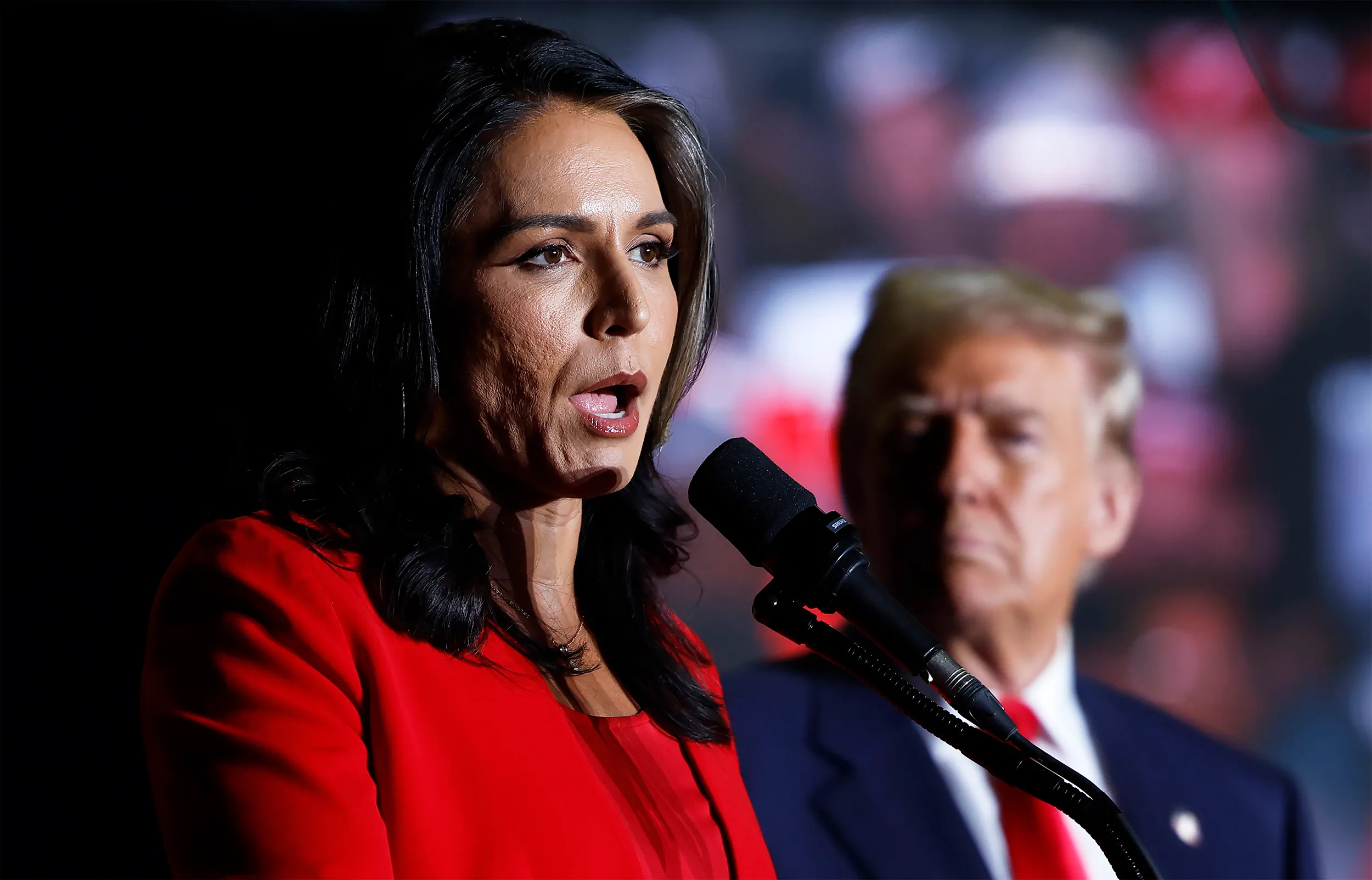
Tulsi Gabbard resigned from President Donald Trump’s administration amid her husband’s cancer battle and rising internal tensions over Iran policy.
WEBDESK – MediaBites News
Tulsi Gabbard announced Friday that she is resigning from President Donald Trump’s administration, citing her husband’s diagnosis with a rare form of bone cancer — but political tensions and foreign policy clashes also appear to have played a major role behind the scenes.
In a resignation letter, Gabbard said she was stepping away from public service to support her husband, Abraham Williams, during his medical treatment.
“At this time, I must step away from public service to be by his side and fully support him through this battle,” she wrote.
The White House confirmed her resignation will officially take effect on June 30, with principal deputy director Aaron Lukas expected to serve as acting director of national intelligence afterward.
However, Gabbard’s departure follows months of growing friction inside Trump’s administration, particularly regarding Iran, intelligence assessments and military strategy.
The former Democratic congresswoman, who later became a prominent Trump ally, frequently found herself politically isolated because of her anti-war and anti-interventionist views.
Her relationship with Trump reportedly worsened after she publicly testified that Iran was not actively building a nuclear weapon — a statement Trump openly rejected during escalating tensions with Tehran.
“When told it was Gabbard who had made the assessment, Trump responded, ‘She’s wrong,’” according to reports cited by Axios.
Sources close to the administration claimed Gabbard narrowly escaped dismissal last month after intervention from longtime Trump adviser Roger Stone.
Her tenure as intelligence chief was also marked by internal disputes with the CIA and other agencies over investigations related to JFK assassination files, COVID-19 origins and Havana Syndrome incidents.
Far-right activist Laura Loomer had repeatedly criticized Gabbard publicly and was reportedly among the first figures to reveal news of her resignation online.
The resignation comes shortly after former National Counterterrorism Center Director Joe Kent stepped down in protest over U.S. policy toward Iran and the broader Middle East conflict.
Gabbard now becomes the fourth cabinet-level official to leave Trump’s administration during his current term, following the departures of former Homeland Security Secretary Kristi Noem, ex-Attorney General Pam Bondi and former Labor Secretary Lori Chavez-DeRemer.
Political analysts believe her resignation exposes deep ideological divisions inside Trump’s administration, especially over foreign policy, military intervention and America’s growing confrontation with Iran.
Once considered one of America’s most unconventional politicians, Gabbard rose from military service in Iraq to become a Democratic congresswoman before dramatically shifting toward Trump’s political camp in recent years.
Her sudden departure now adds fresh uncertainty to Trump’s national security team at a time of rising geopolitical tensions worldwide.
Who is Tulsi Gabbard?
Gabbard is one of the most unconventional political figures in modern U.S. politics.
Born in Hawaii, she served in the U.S. Army Reserve and was deployed to Iraq before entering politics. She later became a Democratic congresswoman and even ran for president in 2020 before leaving the Democratic Party and eventually supporting Trump during the 2024 election campaign.
Despite criticism over her lack of intelligence experience, Trump appointed her Director of National Intelligence in early 2025. Her appointment immediately sparked controversy due to her outspoken views on foreign policy and past criticism of U.S. wars.
During her tenure, Gabbard attempted major reforms within the intelligence community, focusing on reducing bureaucracy, investigating claims of politicization, and restructuring intelligence operations. Supporters praised her independence, while critics accused her of politicizing intelligence agencies.
Her resignation now adds to growing turbulence inside Trump’s second-term administration, especially as tensions with Iran continue to dominate Washington’s national security agenda.


2 Comments
Pingback: Anblicks AI Factory Framework
Pingback: คลินิกความงาม ขอนแก่น