


Europe’s biggest music spectacle returns to Vienna tonight as Eurovision 2026 heads into a dramatic final packed with political controversy, viral performances, and fierce competition among Australia, Finland, and Greece.
WEBDESK: MediaBites News
The Eurovision Song Contest 2026 reaches its highly anticipated grand final on Saturday night in Vienna, promising explosive performances, emotional ballads, political protests, and unpredictable drama.
Millions of viewers worldwide are expected to tune in as contestants from across Europe and beyond compete in one of television’s most-watched entertainment events.
This year’s competition features an unusually diverse lineup, ranging from operatic pop and heavy metal to electronic rave anthems and theatrical rock performances.
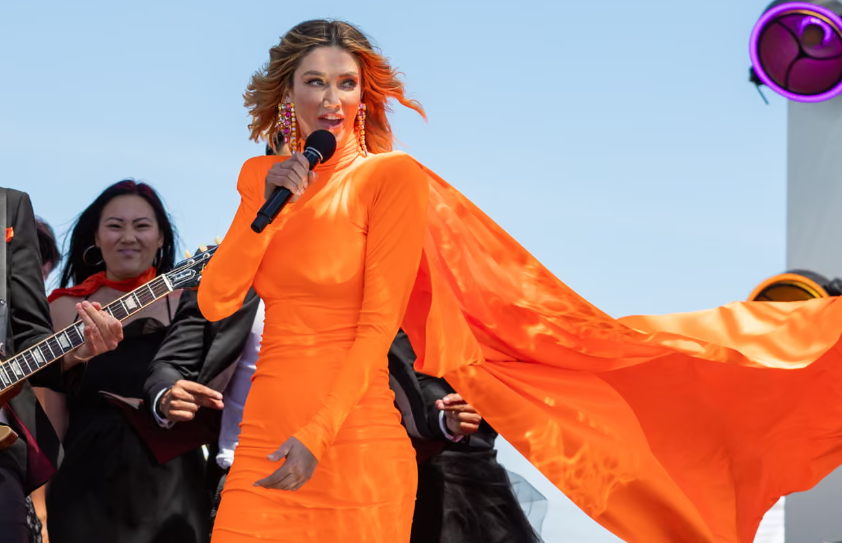
Among the favorites, Australia is chasing its first-ever Eurovision victory with platinum-selling singer Delta Goodrem performing the emotional power ballad “Eclipse.”
Although geographically outside Europe, Australia has remained a regular Eurovision participant since debuting as a special guest in 2015.
Finland currently leads many betting markets with “Liekinheitin,” performed by singer Pete Parkkonen alongside renowned violinist Linda Lampenius.
Their visually dramatic performance, featuring intense choreography and an 18th-century violin, has become one of the contest’s biggest talking points.
Greek singer Akylas has also emerged as a breakout star with “Ferto,” an energetic mix of rave beats, video-game-inspired sounds, and traditional Greek instruments.
The performer revealed he previously worked as a waiter and street musician in Athens before making it to Eurovision.
However, music is not the only reason Eurovision 2026 is dominating headlines.
Israel’s participation continues to spark political controversy due to the ongoing Gaza conflict, with protests expected around the venue during the final.
Israeli contestant Noam Bettan received mixed reactions during the semi-finals, with applause and boos from sections of the audience.
Austrian authorities and Eurovision organizers have significantly increased security measures amid fears of demonstrations and possible disruptions.
The contest has also generated viral attention for several unusual stage acts and backstage incidents.
Norwegian singer Jonas Lovv reportedly had to tone down parts of his rock performance after organizers complained it appeared “too sexy” for family audiences.
Meanwhile, Swedish singer Felicia briefly lost her voice after a wardrobe malfunction during rehearsals before recovering in time for the final.
The United Kingdom’s entry, eccentric inventor-musician Look Mum No Computer, has become one of the competition’s most unconventional acts with the experimental track “Eins, Zwei, Drei.”
Elsewhere, Ukrainian singer Dara and Serbian metal band Lavina are attracting attention for their intense stage visuals and powerful performances.
As Eurovision once again blends music, politics, spectacle, and controversy, tonight’s final in Vienna is expected to deliver one of the competition’s most dramatic editions in recent years.

