


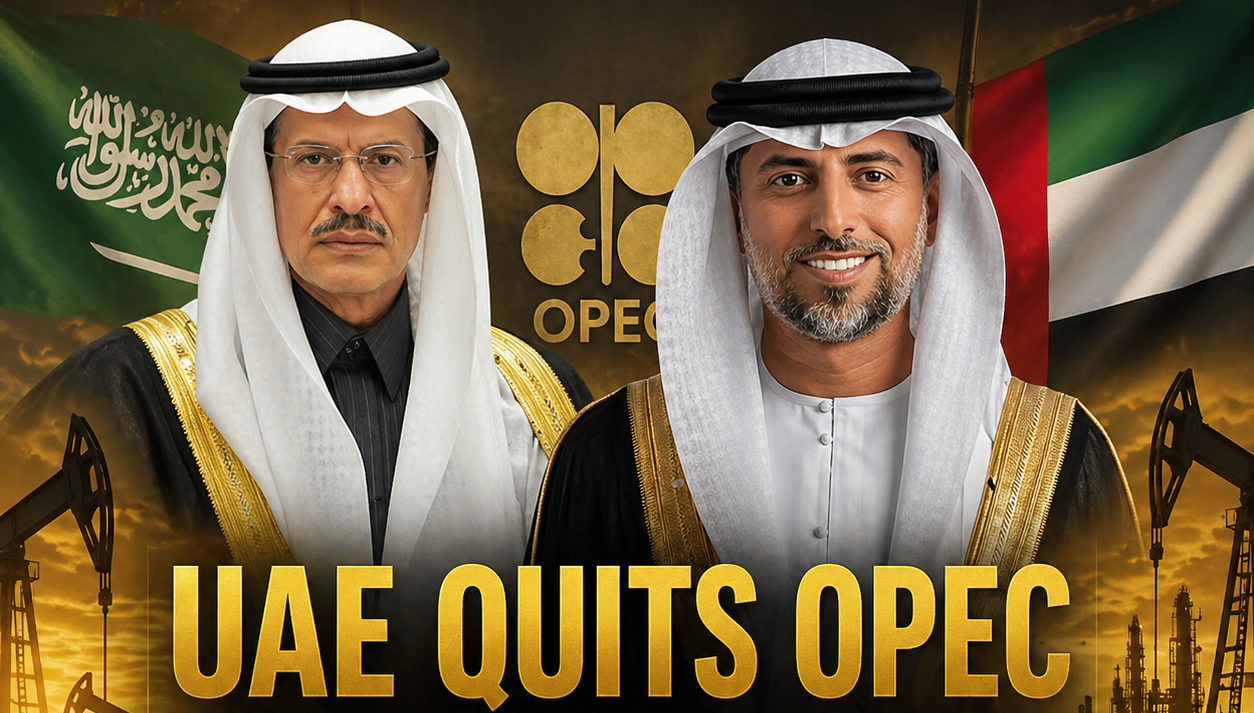
The UAE’s planned exit after nearly six decades could weaken OPEC unity as global markets face fresh energy fears linked to the war in Iran and tensions in the Strait of Hormuz.
Webdesk – MediaBites News
ABU DHABI — The United Arab Emirates is set to leave the Organization of the Petroleum Exporting Countries after almost 60 years, in a major strategic move that could weaken the oil cartel amid rising regional instability and global market anxiety.
The reported decision comes as tensions in the Strait of Hormuz continue to shake energy markets following the war in Iran, heightening fears of supply disruptions through one of the world’s most critical oil shipping lanes.
The UAE’s departure is widely seen as a setback for Saudi Arabia, which has long depended on OPEC unity to manage production targets and influence oil prices. Riyadh now faces greater pressure to keep the remaining members aligned.
Analysts say the move reflects years of disagreements between Abu Dhabi and OPEC leadership over output quotas, with the UAE seeking more freedom to expand production capacity and shape its own energy strategy.
The UAE has invested billions in increasing oil output while also expanding into natural gas, renewable energy, and other industries as part of a broader economic diversification plan. Leaving OPEC could allow the country to react more independently to market changes.
The development may also revive criticism of OPEC from Washington. U.S. President Donald Trump has previously accused the group of manipulating oil prices and hurting consumers.
Market observers say the UAE’s exit could accelerate a broader shift in Gulf energy policy, as producers balance traditional oil revenues with long-term economic priorities.
If confirmed, the decision would mark one of the most significant changes in OPEC’s structure in recent years and raise new questions about the group’s long-term unity and global influence.


1 Comment
Pingback: 44botox