


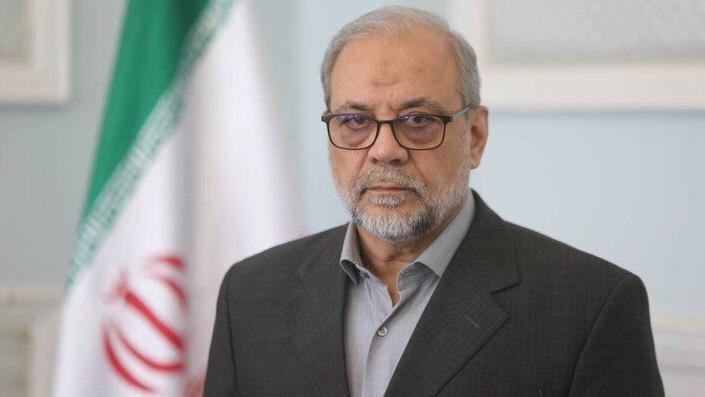
Iran names IRGC veteran Mohammad Bagher Zolghadr as security chief after Larijani’s assassination, signaling a tougher stance as Tehran leans on military leadership amid escalating regional tensions and security threats.
WEBDESK – MediaBites News
Iran has appointed Mohammad Bagher Zolghadr, a former commander of the Islamic Revolutionary Guard Corps (IRGC), as the new secretary of its powerful Supreme National Security Council, following the assassination of Ali Larijani in an Israeli strike.
The appointment highlights Tehran’s growing reliance on military figures to steer national security policy at a time of heightened confrontation with Israel and the United States.
Shift toward hardline security posture
Zolghadr’s elevation is widely seen by analysts as a signal of a more assertive and hardline approach in Iran’s security strategy. His long-standing role within the IRGC — an elite force tasked with safeguarding the Islamic Republic — positions him as a key figure in shaping Iran’s response to external threats.
Officials say the move reflects Iran’s intent to reinforce internal security mechanisms while preparing for potential retaliation against perceived adversaries, particularly Israel.
Education and career background
Mohammad Bagher Zolghadr holds advanced education in political and strategic studies, having been trained in military command and national security policy within Iran’s top defense institutions.
He has previously served as:
- Deputy commander-in-chief of the IRGC
- Senior official within Iran’s law enforcement apparatus
- Secretary of the Expediency Discernment Council, a body that advises the Supreme Leader on state matters
Zolghadr is considered a seasoned security strategist with decades of experience in intelligence, internal security, and military operations.
Consolidation of power within elite circles
His appointment underscores the consolidation of influence among Iran’s military and political elite, particularly within institutions closely aligned with the Supreme Leader.
The Supreme National Security Council plays a critical role in determining Iran’s defense and foreign policy decisions, making Zolghadr’s position one of the most powerful in the country’s security architecture.
Regional implications
The leadership change comes amid escalating regional tensions and ongoing military exchanges involving Iran and its adversaries.
Analysts warn that placing a veteran IRGC figure at the helm of national security decision-making could lead to a more confrontational stance, potentially increasing the risk of further escalation in an already volatile region.
A decisive moment for Tehran
With the assassination of Ali Larijani marking a major turning point, Iran’s leadership appears to be doubling down on security-first policies.
Whether Zolghadr’s appointment leads to stronger deterrence or heightened confrontation remains to be seen, but it clearly signals Tehran’s intent to navigate the crisis with a firm, military-backed approach.


3 Comments
Downloaded the mnl63 app, and so far, it’s a pretty good mobile experience! Easy access on the go. Test it here: mnl63 app
MNL63 free 100? Sweet! Gotta love a bonus to get started. Let’s see if I can turn it into something big. Get yours: mnl63 free 100
Anyone having trouble logging in? Just used 66jllogin and it was smooth sailing. Hope you guys are having some good luck!