


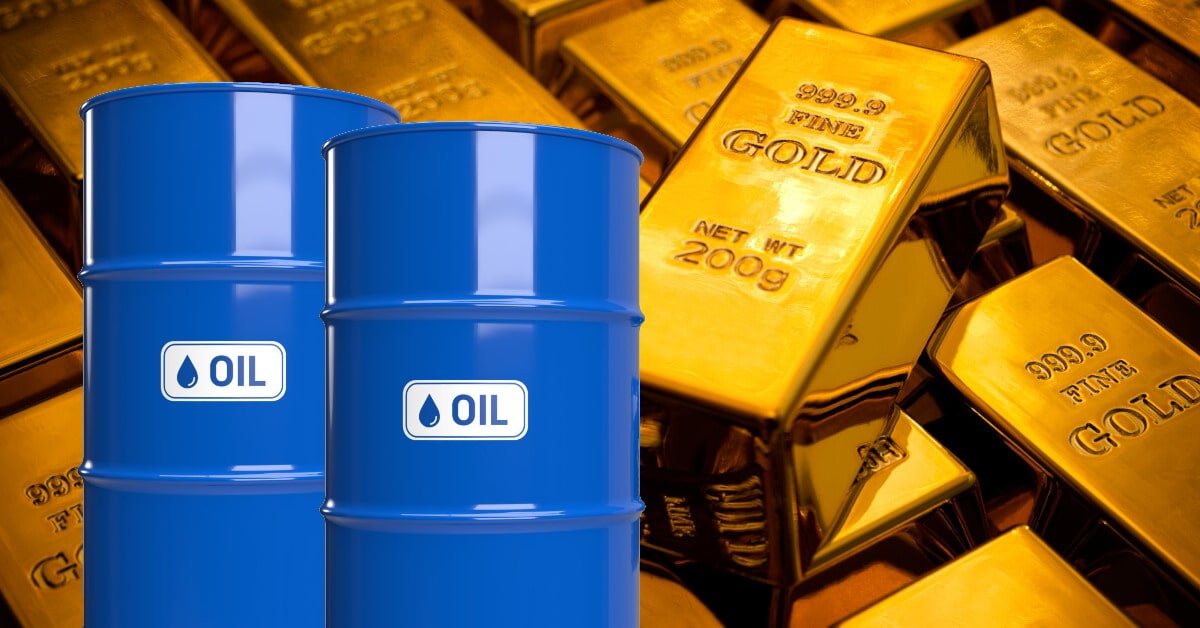
Oil prices remain near multi-year highs despite Trump’s Iran ultimatum, while gold drops sharply as inflation fears and expectations of prolonged high interest rates reshape global market sentiment.
By MediaBites | March 23, 2026
Oil prices steadied near multi-year highs on Monday, showing little reaction to U.S. President Donald Trump’s ultimatum urging Iran to reopen the Strait of Hormuz, as markets focused on supply realities rather than political rhetoric.
Brent crude hovered just below $112 per barrel, while U.S. West Texas Intermediate (WTI) traded near $98, reflecting cautious but stable trading despite heightened geopolitical tensions in the Gulf.
Analysts say the muted response signals growing investor skepticism about the immediate impact of political threats, noting that global oil flows remain largely uninterrupted.
“Markets are no longer reacting to headlines alone. Without an actual supply disruption, prices tend to stabilize,” a market analyst said, highlighting the continued movement of shipments through key routes.
Investors are also weighing multiple variables, including Iran’s resilience under pressure, the possibility of quiet diplomatic engagement, and the broader balance between global supply and demand.
The steady oil prices suggest what experts describe as increasing “market maturity,” with traders distinguishing between political signaling and real risks to energy infrastructure.
Meanwhile, gold prices tumbled more than 3%, marking a sharp reversal for the traditional safe-haven asset.
The decline comes as rising oil prices stoke inflation concerns, strengthening expectations that the U.S. Federal Reserve will maintain higher interest rates for longer. This reduces the appeal of non-yielding assets like gold.
Instead of benefiting from geopolitical tensions, gold has come under pressure as investors shift toward assets that perform better in a high-interest-rate environment.
Analysts say the divergence between strong oil and weakening gold reflects a broader shift in market sentiment, where inflation and monetary policy are outweighing traditional crisis-driven investment patterns.
The current trend underscores a complex interplay between geopolitics, inflation, and central bank policy—suggesting global markets are increasingly driven by economic fundamentals rather than political headlines alone.


2 Comments
acne meds rx; acnemedsrx.com,
Pingback: https://monro-kazino.com.kz/kk