


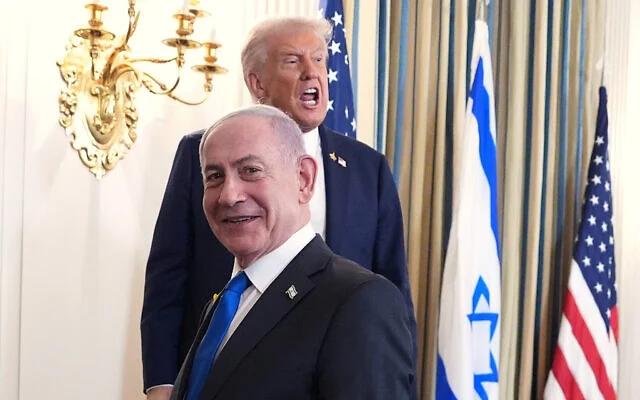

Israel pauses planned strikes on Iranian gas fields after Donald Trump’s intervention, as Gulf tensions escalate, LNG disruptions hit global markets, and fears of a wider regional war intensify.
WEBDESK – MediaBites News – Source: BBC
Israeli Prime Minister Benjamin Netanyahu has agreed to temporarily halt attacks on Iranian gas infrastructure following a direct request from U.S. President Donald Trump, in a move seen as an attempt to prevent further escalation in an already volatile region.

The development comes amid a surge in hostilities across the Middle East, with missile and drone attacks reported in the United Arab Emirates, Kuwait, Saudi Arabia, and Bahrain. Authorities in the UAE and Bahrain attributed the strikes to Iranian aggression, signaling a widening conflict footprint beyond Israel and Iran.
Netanyahu confirmed he would “hold off” on targeting Iranian gas fields but rejected claims that Israel was dragging Washington into war. The pause is viewed as a tactical de-escalation effort, even as military tensions continue to rise on multiple fronts.
Explosions were reported in both Jerusalem and Tehran, further intensifying fears of a broader confrontation. Iranian officials warned they would respond with “zero restraint” to any additional attacks, raising the stakes for regional stability.
The energy sector has emerged as a critical flashpoint. Qatar’s prime minister described an الإيراني strike on the Ras Laffan industrial city—home to one of the world’s largest liquefied natural gas (LNG) export hubs—as a “very dangerous escalation.” The country’s energy minister said the हमला could reduce Qatar’s LNG export capacity by up to 17% over the next five years, translating into an estimated $20 billion in annual revenue losses.
The disruption has already sent shockwaves through global markets, with gas prices surging across the United Kingdom and Europe amid fears of prolonged supply constraints.
Meanwhile, the human cost of the conflict continues to mount. The Human Rights Activists News Agency (Hrana) reported that the death toll in Iran has reached 3,186 since the outbreak of hostilities on February 28.
As the Persian New Year, Nowruz, approaches, many Iranians are preparing for the celebrations under the shadow of war. Reports indicate growing anxiety among citizens, with some hesitant to return to Tehran due to safety concerns.
The situation remains fluid, with diplomatic efforts intensifying behind the scenes to prevent a wider regional war while energy markets brace for further disruption.

