


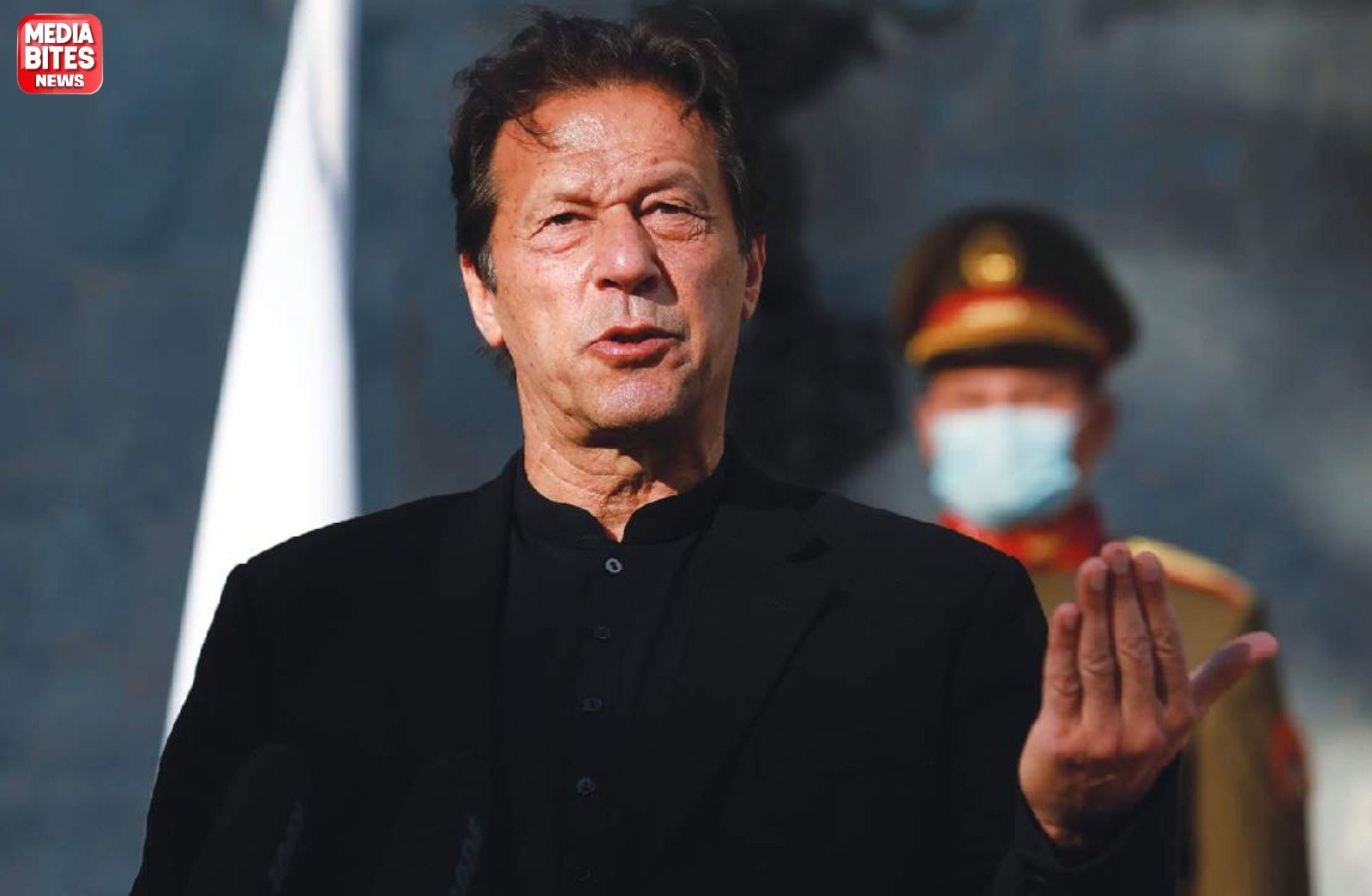
In a shocking development that has sent ripples through Pakistan’s political landscape, a detailed medical and observational report submitted to the Supreme Court of Pakistan on February 12, 2026, reveals that former Prime Minister Imran Khan has lost approximately 85% of the vision in his right eye. The report, prepared by Barrister Salman Safdar, who was appointed as amicus curiae (friend of the court) by the Supreme Court, paints a distressing picture of the 73-year-old leader’s health within the walls of Adiala Jail.
The Medical Crisis: From 6/6 to 15%
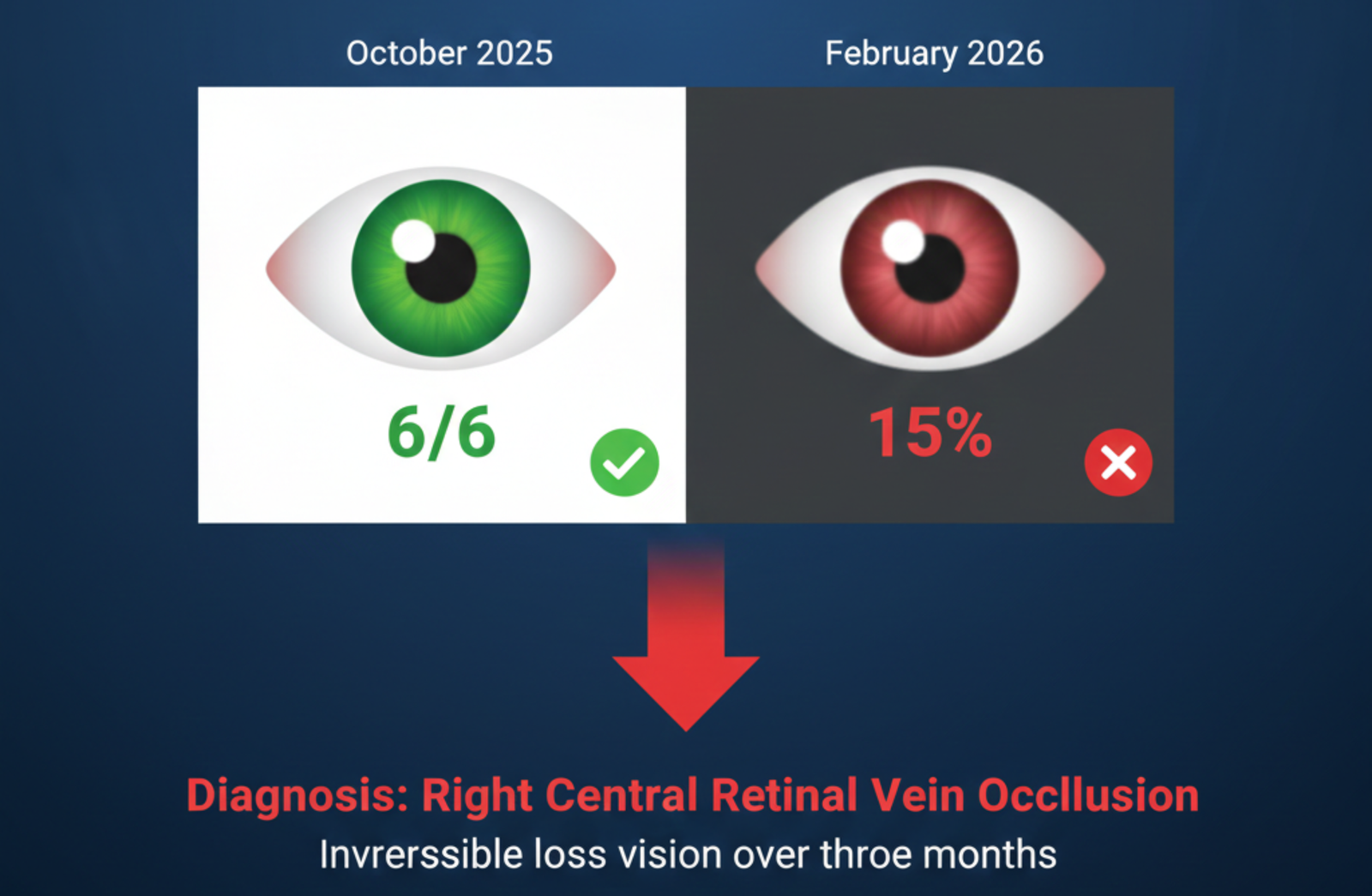 According to the findings presented to a two-member bench headed by Chief Justice Yahya Afridi, Imran Khan’s vision was near-perfect as recently as October 2025. However, the situation deteriorated rapidly over the last three months.
-
The Diagnosis: Doctors at the Pakistan Institute of Medical Sciences (PIMS) have diagnosed the condition as “Right Central Retinal Vein Occlusion”—essentially a blood clot that blocks the main vein carrying blood away from the retina.
-
The Current State: Despite an emergency medical procedure on January 24, which included a specialized intravitreal injection, the report states that Khan can now only detect light and has retained a mere 15% capacity in his right eye.
-
Physical Discomfort: Barrister Safdar noted that during their two-hour meeting, Khan’s eyes were “continuously watery,” and he had to repeatedly wipe them with tissues due to physical distress.
Allegations of “Medical Terrorism” and Neglect
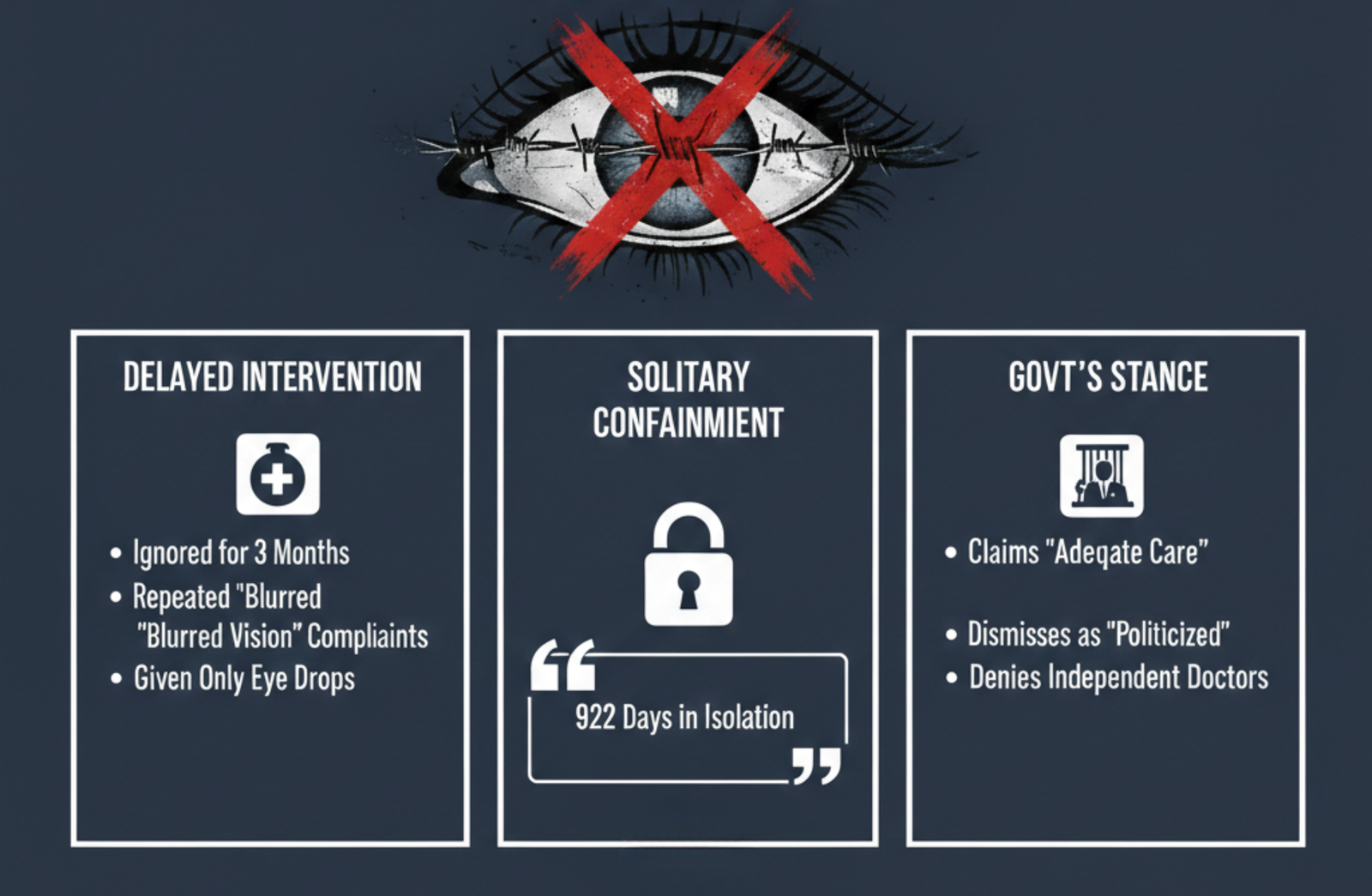
The report has triggered a fierce war of words between the opposition and the government. PTI leadership and Khan’s family have labeled the situation as “medical terrorism.”
-
Delayed Intervention: The report alleges that Khan repeatedly informed the jail superintendent of “blurred and hazy vision” starting in late 2025, but his complaints were allegedly met with “eye drops and inaction” for nearly three months.
-
Solitary Confinement: Khan’s son, Kasim Khan, took to social media to blame the loss of vision on “922 days of solitary confinement” and the “deliberate denial” of independent medical check-ups.
-
Government Stance: In response, Information Minister Attaullah Tarar dismissed the claims of poor living conditions, stating that the report actually confirms Khan has adequate ventilation, light, and a proper diet, suggesting the vision issue is being “politicized.”
Supreme Court Steps In
Recognizing the gravity of the situation, the Supreme Court has taken immediate action:
-
Medical Board: The court ordered the formation of an independent medical team to conduct a comprehensive examination of the former PM’s eye.
-
Access to Physicians: Access to his personal physicians, Dr. Faisal Sultan and Dr. Asim Yusuf, which was previously restricted, is being reviewed.
-
Family Contact: The court directed jail authorities to arrange a telephone call between Khan and his sons, Kasim and Sulaiman, before February 16.
“Health is the most important issue. The state has a responsibility to provide equal medical care to all prisoners.” Chief Justice Yahya Afridi, February 13, 2026.
Conclusion: A Nation in Anticipation
As the medical board prepares its final assessment, the health of the PTI founder remains a volatile issue. Supporters argue that the loss of an eye’s vision is an “irreversible price” paid for political imprisonment, while the state maintains that it is providing the best possible care under difficult circumstances. The upcoming medical report, due by Monday, will determine not just the future of Imran Khan’s health, but potentially the next wave of political protests in Pakistan.
Frequently Asked Questions
1. What happened to Imran Khan’s right eye?
A court-submitted medical report states that he has lost approximately 85% of vision in his right eye due to Right Central Retinal Vein Occlusion.
2. What is Right Central Retinal Vein Occlusion?
It is a condition caused by a blood clot blocking the main vein that drains blood from the retina, leading to sudden and severe vision loss.
3. Where was Imran Khan treated?
He received emergency treatment, including an intravitreal injection, at the Pakistan Institute of Medical Sciences (PIMS).
4. What has the Supreme Court ordered?
The court has directed the formation of an independent medical board, reviewed access to his personal doctors, and ordered that he be allowed contact with his family.
5. How has the government responded?
Government officials have denied allegations of negligence, stating that adequate medical care and prison conditions are being provided.


4 Comments
Tried out ggbbbet the other day. Gotta say, I was pleasantly surprised! Decent variety and a smooth interface. Worth a shot! ggbbbet
Went through the bet3333login process just now, and the actual site? Not bad! Seems reliable and the gaming is solid. Wouldn’t hurt to check them out, especially if you needing something new. bet3333login
Downloaded the 78betapp yesterday. It’s pretty slick! Easy to use, performs well. Good option if you like to play on the fly. Totally recommend it! 78betapp
Pingback: stoner