



Pakistan reached a significant technological milestone on February 12, 2026, with the successful launch of its second locally developed satellite, PRSC-EO2.
Launched from China’s Yangjiang Seashore Launch Centre, the satellite was carried into space aboard the Smart Dragon-3 rocket. This event marks a “breakthrough” for the nation’s space agency, SUPARCO (Space and Upper Atmosphere Research Commission), as it moves toward complete self-reliance in satellite design and deployment.
Key Highlights of the EO-2 Mission
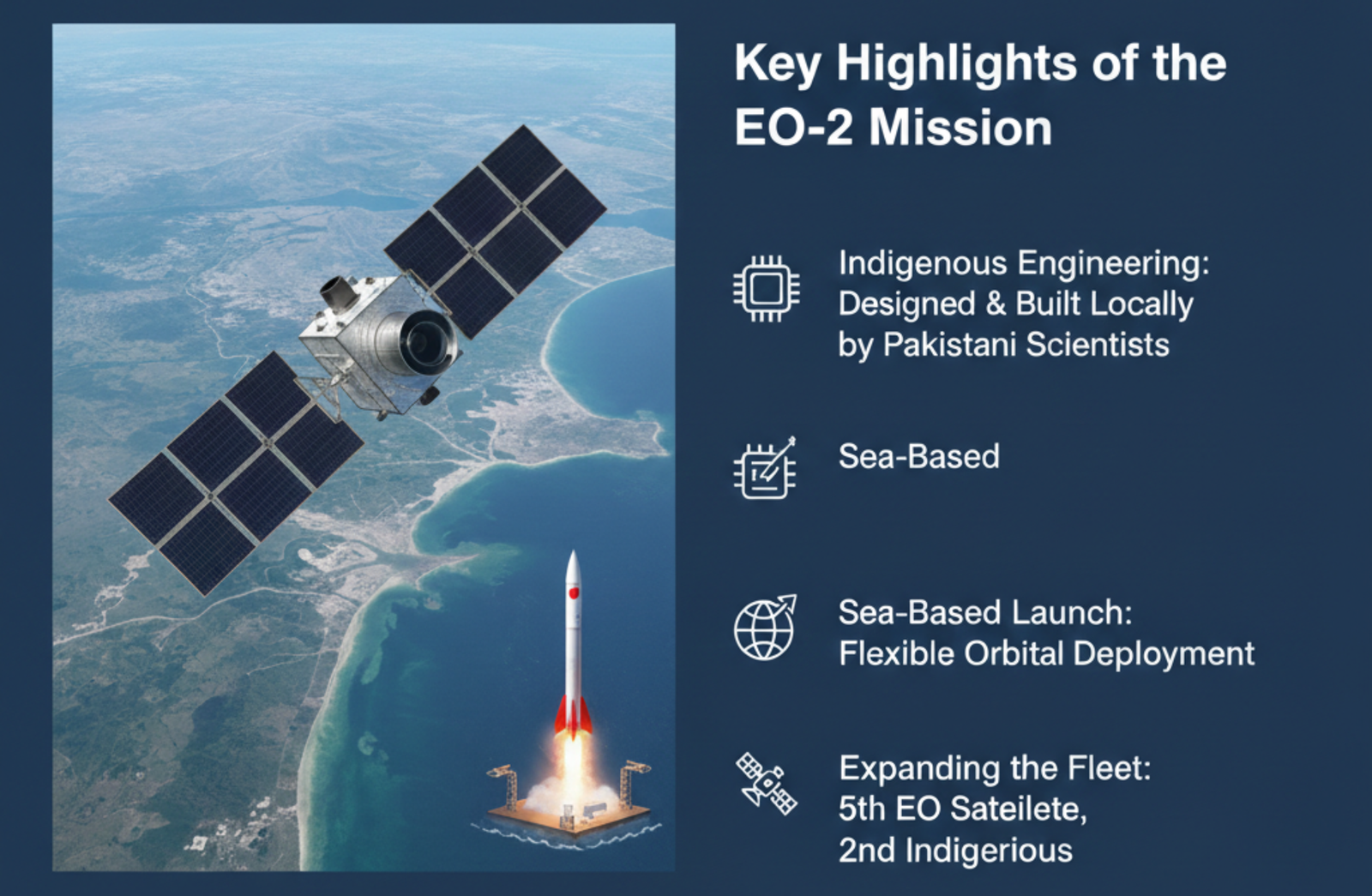 The PRSC-EO2 is an Earth Observation satellite designed to provide high-resolution imagery. This launch is particularly notable for several reasons:
-
Indigenous Engineering: Unlike earlier models that relied heavily on foreign assembly, EO-2 was designed and built locally by Pakistani scientists and engineers.
-
Sea-Based Launch: This mission utilized China’s mobile sea-based launch platform for the first time for a Pakistani payload, offering greater orbital flexibility.
-
Expanding the Fleet: This is Pakistan’s fifth Earth Observation satellite overall, but only the second to be truly indigenous (following EO-1 launched last year).
How EO-2 Will Benefit Pakistan
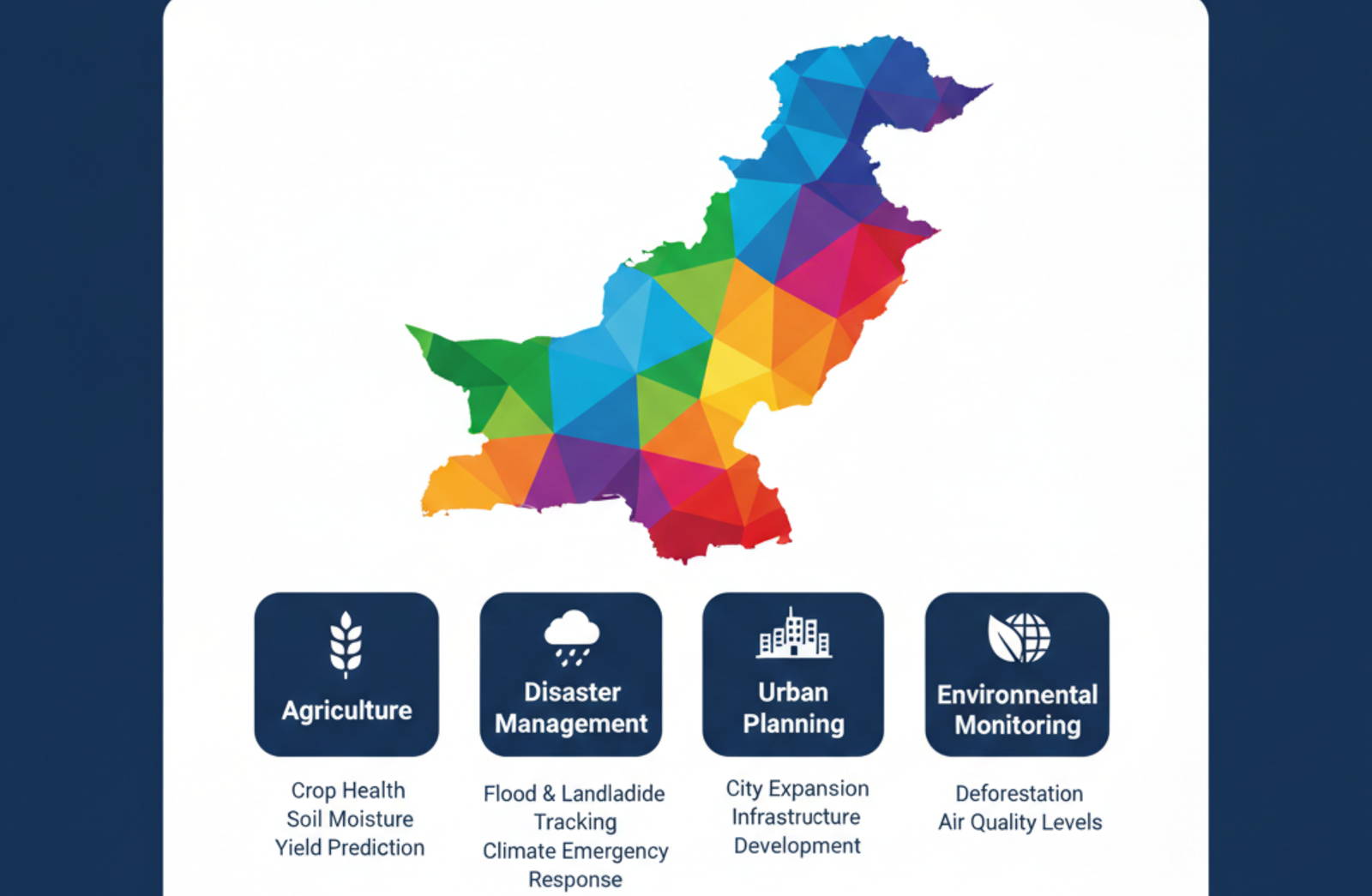
The data gathered by this satellite isn’t just for scientific prestige it has practical, everyday applications for the country’s development:
| Sector | Impact of EO-2 Data |
| Agriculture | Monitoring crop health, soil moisture, and predicting yields for food security. |
| Disaster Management | Real-time tracking of floods, landslides, and climate-induced emergencies. |
| Urban Planning | Mapping the rapid expansion of cities like Lahore and Karachi for better infrastructure. |
| Environmental Monitoring | Tracking deforestation and air quality levels across the Indus Basin. |
Looking Ahead: The Road to 2035
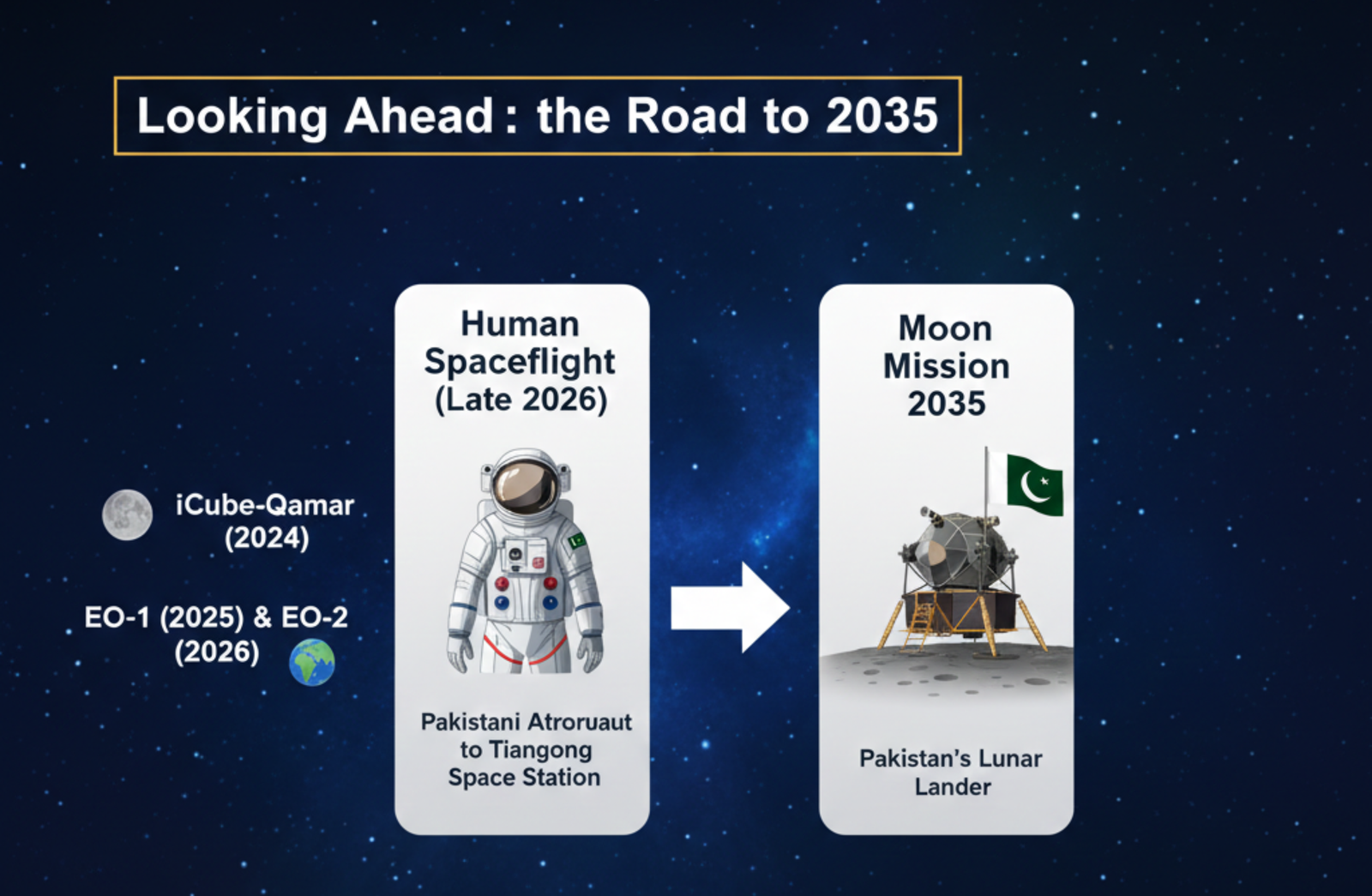 The launch of EO-2 is a stepping stone in a much larger vision. During the post-launch celebrations, officials highlighted two major upcoming goals:
-
Human Spaceflight: Two Pakistani candidates were recently shortlisted for training in China, with the goal of sending the first Pakistani astronaut to the Tiangong Space Station.
-
Moon Mission 2035: Building on the success of the iCube-Qamar (which reached lunar orbit in 2024), Pakistan aims to land its own spacecraft on the Moon by 2035.
“This success reflects our growing technological footprint and the enduring Pakistan-China strategic partnership that is now transcending into space.” — Prime Minister of Pakistan, February 2026.
Conclusion: A New Era for SUPARCO
For years, Pakistan’s space program was seen as lagging behind regional competitors. However, the back-to-back successes of EO-1 (2025) and now EO-2 (2026) signal a revitalized agency. By developing its own “eyes in the sky,” Pakistan is reducing its dependence on expensive foreign satellite data and positioning itself as a rising player in the global space economy.
Frequently Asked Questions
Q1: What is the name of Pakistan’s second indigenous satellite?
The satellite is named PRSC-EO2. It is an advanced Earth Observation (EO) satellite designed and developed locally by the Pakistan Space and Upper Atmosphere Research Commission (SUPARCO).
Q2: When and where was it launched?
It was launched on February 12, 2026, from the Yangjiang Seashore Launch Centre in China, using the Smart Dragon-3 (SD-3) rocket.
Q3: How is this satellite different from the previous ones?
Unlike earlier satellites that were often built abroad, EO-2 is the second satellite to be truly indigenous (designed and integrated within Pakistan). It also offers higher-resolution imagery and better “revisit frequency,” meaning it can capture images of the same spot on Earth more often.
Q4: What are the primary uses of the PRSC-EO2?
The data will be used for:
-
Precision Agriculture: Monitoring crop health and water levels.
-
Disaster Management: Real-time tracking of floods and climate changes.
-
National Security: Strengthening border monitoring and surveillance.
-
Urban Planning: Mapping city growth in Karachi, Lahore, and Islamabad.
Q5: What is next for Pakistan’s space program?
Following this success, Pakistan is focused on two major goals:
-
Human Spaceflight: Sending the first Pakistani astronaut to the Tiangong Space Station in late 2026.
-
Moon Mission: Aiming for a lunar landing by 2035.

