


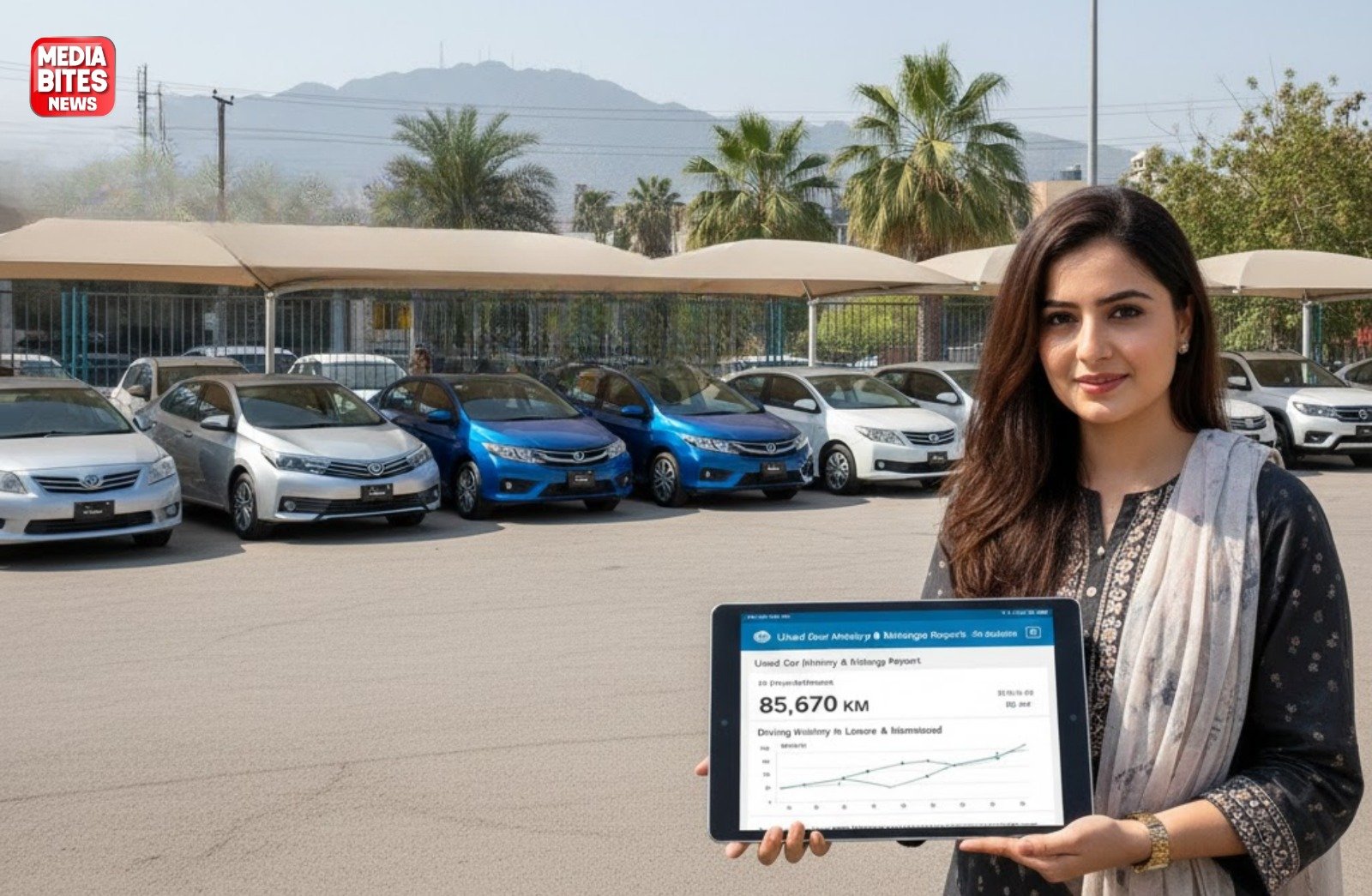
Buying a used car in Pakistan is often a game of trust, but verify. From “meter-clocking” to hidden accident repairs, sellers use various tactics to inflate the price of a vehicle. To ensure you are making a sound investment, follow this comprehensive guide to verify a car’s true history.
1. Mechanical & Physical Mileage Verification
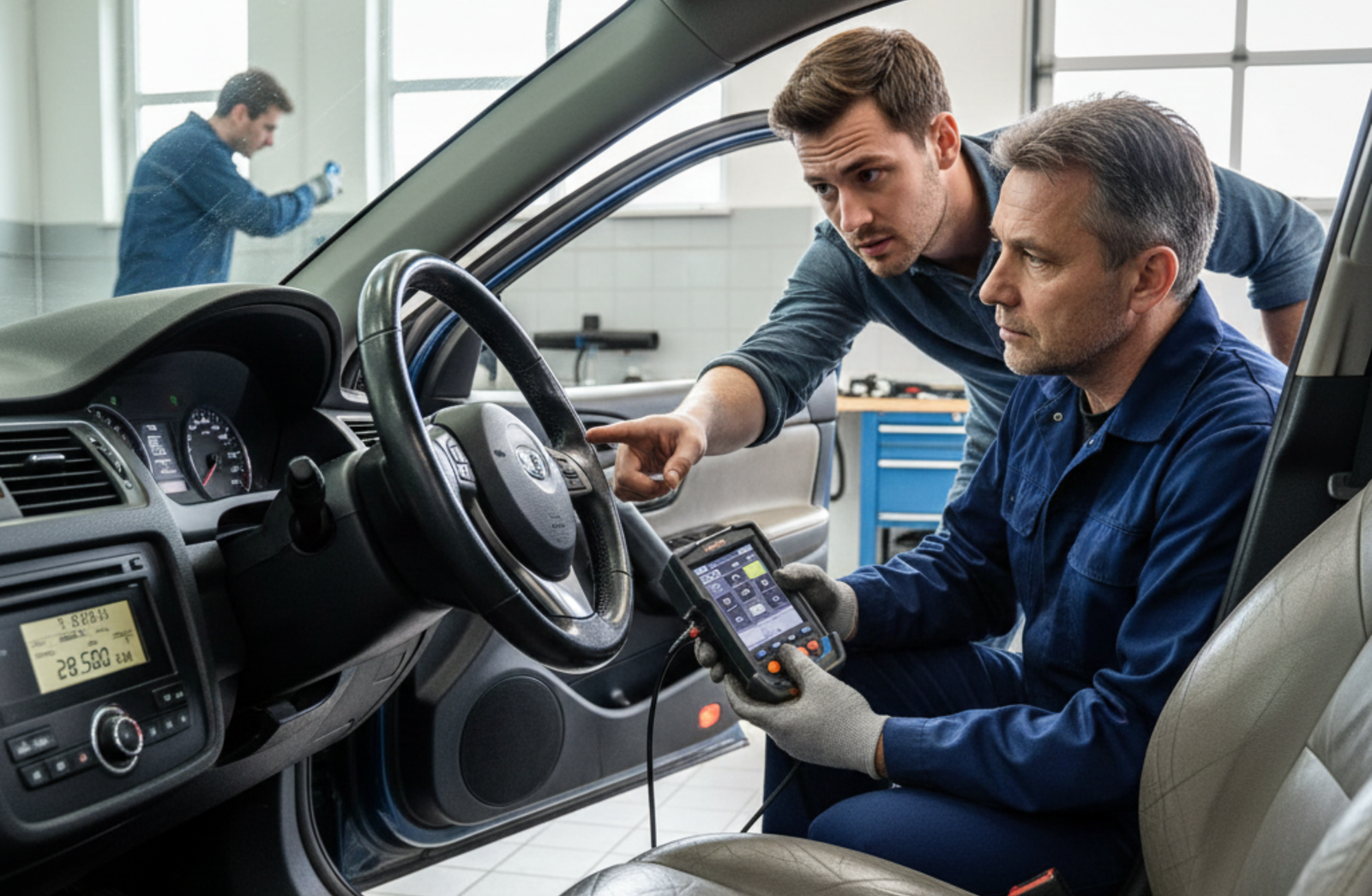 The odometer is the easiest thing to fake, but the physical condition of the car is much harder to hide.
Interior “Tell-Tale” Signs
A car with a low odometer reading (e.g., 20,000 km) should not have significant wear. Look for:
-
The Steering Wheel & Gear Knob: If the texture is smooth or “shiny,” it indicates high usage (usually over 80,000 km).
-
Pedal Wear: Check the rubber on the brake and clutch. If the metal is showing through, the car has likely traveled much further than the dash suggests.
-
Driver’s Seat Bolster: Excessive sagging or fabric wear on the entry side of the seat is a classic sign of a high-mileage vehicle.
Check the Service Stickers
Many owners forget to remove the oil change stickers usually placed on the side of the driver’s door frame or the corner of the windshield. These stickers list the mileage at the time of the last service. If the sticker says 90,000 km and the odometer says 50,000 km, the meter has been reversed.
2. Deciphering Japanese Auction Sheets
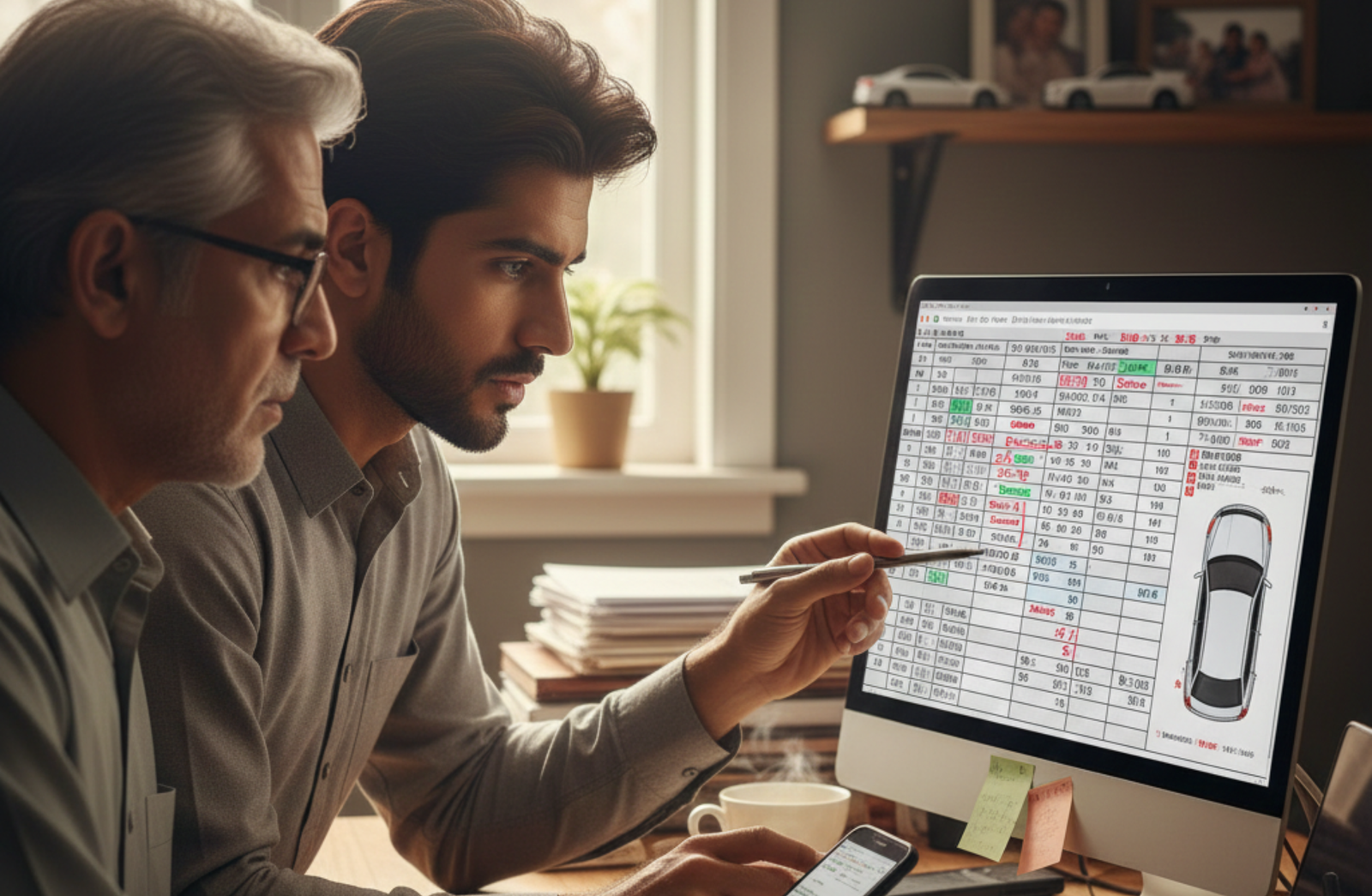 If you are buying an imported “660cc” or “1000cc” Japanese car, the Auction Sheet is your most important document. It provides a map of all body repairs and the original mileage in Japan.
How to Read the Map
Auction sheets use a specific coding system to mark body damage:
-
A: Scratches (A1 is small, A3 is large).
-
U: Dents.
-
W: Repainted panels (W1 is a good job, W3 is visible).
-
XX: Replaced panel.
Expert Tip: Never trust a printed paper provided by the dealer. Use the car’s Chassis Number to verify the sheet online via independent Japanese databases like Carverse or Aleado.
3. Official Document & Legal History
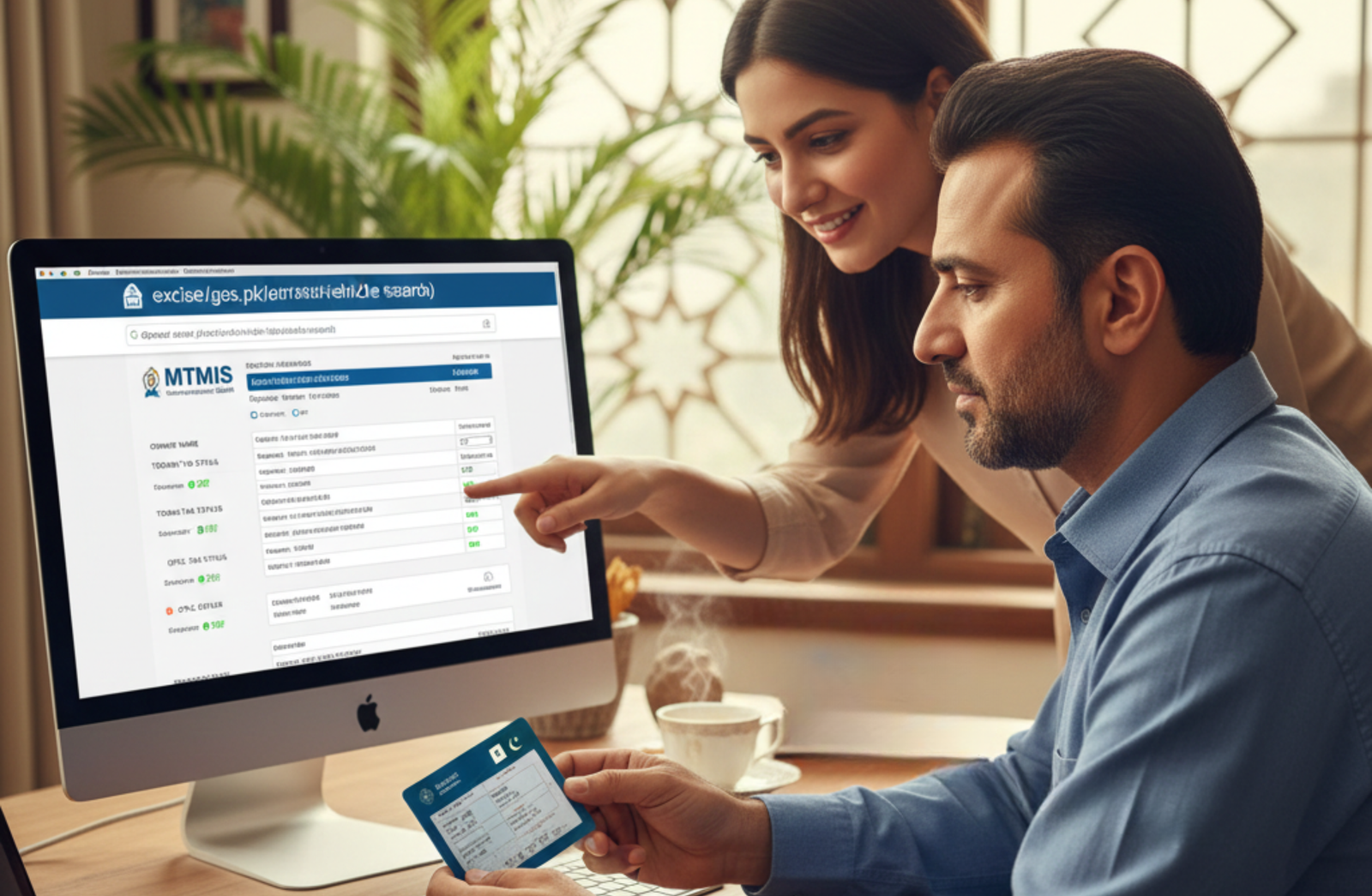 In Pakistan, you must verify the legal status of the vehicle to avoid buying a stolen or “bank-leased” car.
MTMIS Online Verification
Use the Excise and Taxation Department’s MTMIS portal to check:
-
Ownership: Ensure the seller is the registered owner.
-
Tax Status: Check if the “Token Tax” is updated.
-
Engine/Chassis Match: Ensure the numbers on the physical car match the registration book and the online database.
The “Duplicate” Warning
Always check if the Registration Book or Smart Card is “Duplicate.” A duplicate book significantly reduces the resale value of the car and may hide a history of bank repossession or previous loss of documents.
4. Professional Inspection Services
 If you aren’t an expert, it is worth spending a few thousand rupees on a professional inspection.
-
Paint Depth Gauge: Professionals use an electronic gauge to check if a car is “Genuine Paint” or “Poteen” (body filler).
-
OBD-II Scanning: This tool connects to the car’s computer to find hidden engine faults and, in some models, can reveal the true mileage stored in the Transmission or ECU.
Summary Checklist for Buyers:
-
[ ] Check MTMIS for tax and ownership.
-
[ ] Verify Auction Sheet online (for Japanese imports).
-
[ ] Inspect Pedals/Steering for wear vs. mileage.
-
[ ] Request Service History or dealership maintenance logs.
-
[ ] Verify CPLC Status (especially in Sindh) to ensure it’s not a snatched vehicle.
Frequently Asked Questions
1. What does “meter-clocking” mean?
Meter-clocking is when a seller rolls back the car’s odometer to make it appear that the car has traveled fewer kilometers than it actually has. This inflates the price.
2. How can I verify the true mileage of a used car?
Check the physical condition of the car: pedal wear, steering wheel texture, and driver’s seat sagging. Also, inspect oil change/service stickers and professional OBD-II readings.
3. What is a Japanese Auction Sheet and why is it important?
A Japanese Auction Sheet is a document that details the car’s original mileage and any past body repairs. It helps verify if an imported car has hidden damage or mileage manipulation.
4. How do I read damage codes on a Japanese Auction Sheet?
-
A: Scratches (A1 small, A3 large)
-
U: Dents
-
W: Repainted panels (W1 good, W3 visible)
-
XX: Replaced panel
5. Can I trust the dealer-provided Auction Sheet?
No. Always verify the Auction Sheet online using the car’s chassis number on independent Japanese databases like Carverse or Aleado.
6. How do I check the legal history of a used car in Pakistan?
Use the MTMIS online portal from the Excise & Taxation Department to check ownership, tax status, and engine/chassis number matches.
7. Why should I be cautious of a “Duplicate” Registration Book?
A duplicate registration book can indicate past issues like bank repossession or lost documents. It also reduces resale value.
8. What professional inspections are recommended before buying a used car?
-
Paint Depth Gauge: Checks if paint is original or covered with body filler.
-
OBD-II Scan: Detects hidden engine faults and sometimes stores true mileage.
9. How can I ensure the car is not stolen?
Check the CPLC (Citizen-Police Liaison Committee) status in Sindh or local equivalent to confirm the vehicle is not reported stolen or snatched.
10. What should my final checklist include when buying a used car?
-
MTMIS tax and ownership verification
-
Auction Sheet verification (for imports)
-
Pedal/steering/seat wear check
-
Service history and dealership logs review
-
CPLC or local police verification


4 Comments
Mình vừa đăng ký chơi ở https://fly88.in/ thấy cũng khá ổn.
Hi my family member I want to say that this post is awesome nice written and come with approximately all significant infos I would like to peer extra posts like this
[url=https://canadapharmacy-usa.net/drug/celebrex/]celecoxib without prescription[/url]
arava without prescription
Pingback: baht188 เกมแท้ 500 ฝาก–ถอนออโต้