


ISLAMABAD – A wave of grief and terror swept through the federal capital on Friday, February 6, 2026, as a devastating suicide bombing targeted the Khadija-tul-Kubra Imambargah in the Tarlai Kalan area. The attack, which occurred during Friday prayers, has left at least 31 people dead and more than 160 injured, marking one of the darkest days in the city’s recent history.
The Attack: A Prevented Catastrophe, A Heavy Cost
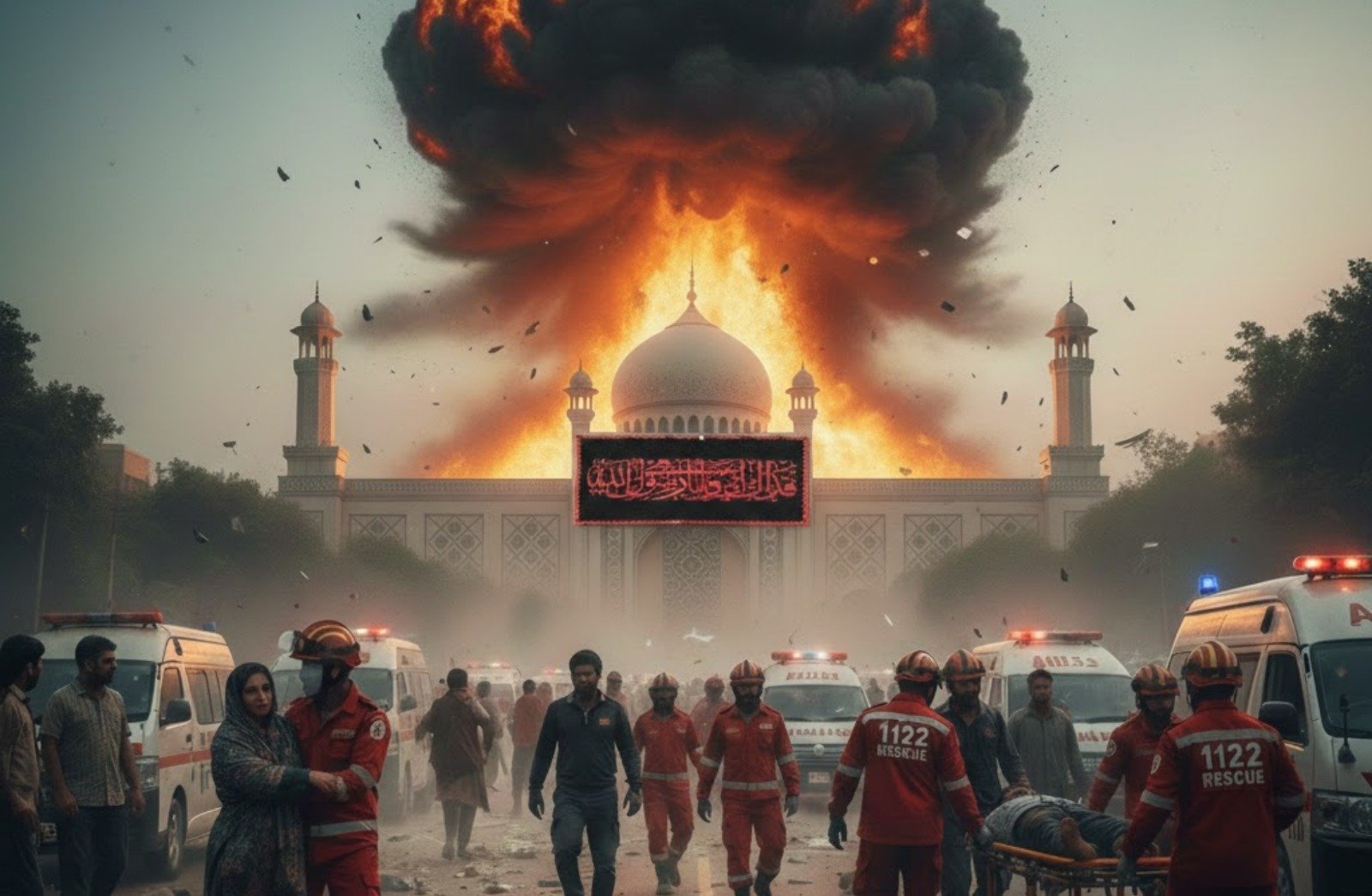 Eyewitnesses and security officials report that the tragedy could have been even worse. A suicide bomber attempted to enter the main hall of the Imambargah where hundreds of worshippers had gathered. However, alert security guards intercepted the attacker at the main entrance. Failing to breach the inner sanctum, the bomber detonated his explosives at the gate. The resulting blast was so powerful it shattered windows of nearby buildings and sent thick plumes of black smoke into the sky, visible for miles across the Shehzad Town area.
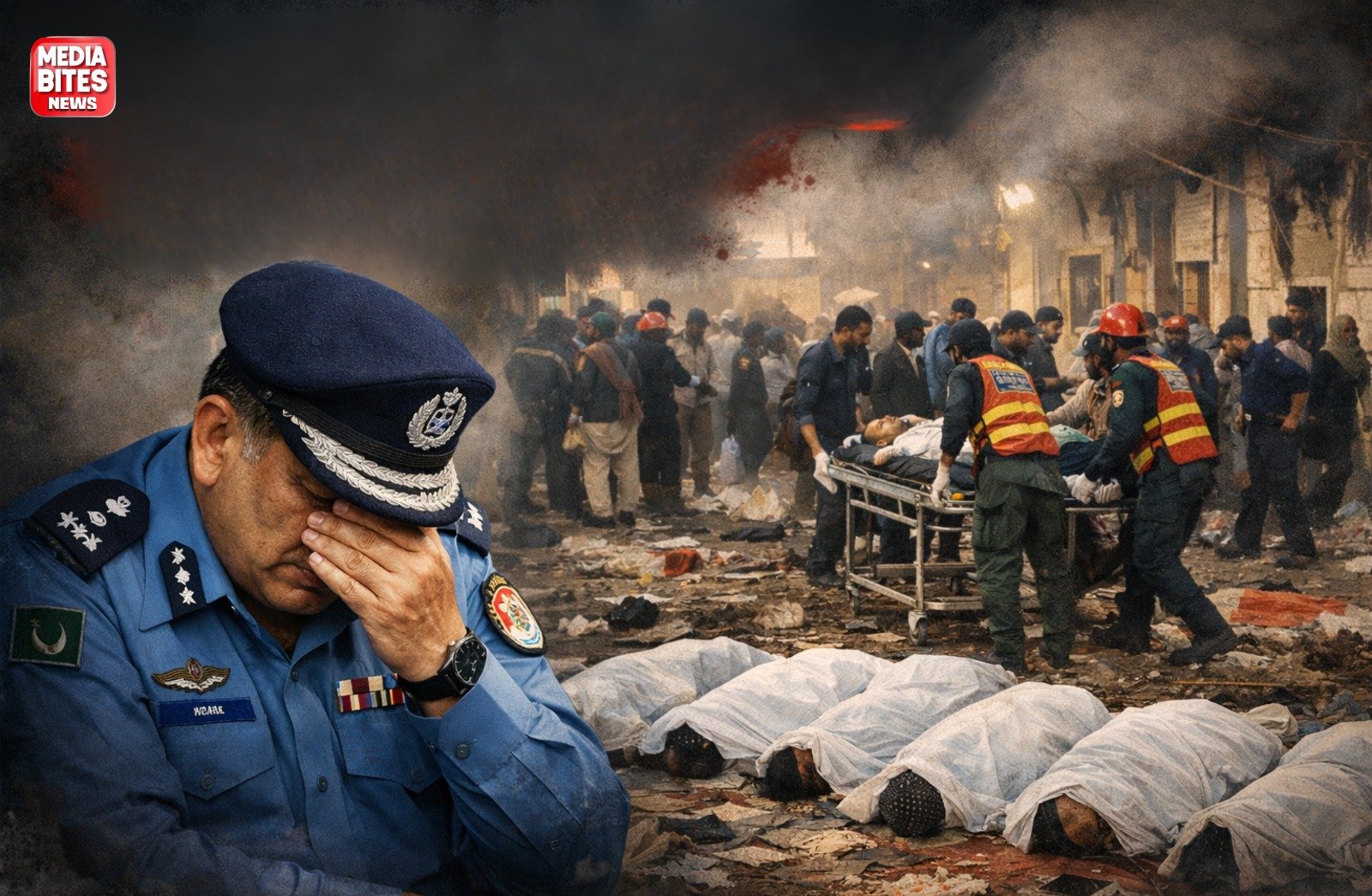
IG Islamabad in Tears
The emotional toll of the incident was epitomized by Inspector General (IG) of Islamabad Police, who was seen visibly shaken and in tears while visiting the site and overseeing rescue operations. The IG immediately declared a city-wide security emergency, placing all law enforcement agencies on high alert.
“This is an attack on humanity and the very fabric of our peace,” officials stated, as forensic teams began collecting evidence from the charred entrance.
Casualties and Emergency Response
The aftermath saw a frantic rescue effort as locals and first responders rushed the victims to various facilities.
-
PIMS Hospital: Over 32 injured were brought here, with an emergency declared across all wards.
-
Polyclinic & CDA Hospitals: Emergency protocols were activated to handle the overflow of victims.
-
Critical Condition: Medical staff warn that the death toll may rise, as dozens of the 169 injured remain in critical condition.
| Location of Incident | Time of Attack | Initial Death Toll | Total Injured |
| Tarlai Kalan, Islamabad | Friday Prayers (Approx. 1:30 PM) | 31 | 160+ |
National Condemnation
The attack has drawn swift and fierce condemnation from the highest levels of government:
-
President Asif Ali Zardari termed the targeting of innocent civilians a “crime against humanity.”
-
Prime Minister Shehbaz Sharif ordered a high-level investigation, vowing that the perpetrators and their handlers would be brought to justice.
-
Senate Opposition Leader Allama Raja Nasir Abbas called the incident a “serious failure of security,” emphasizing that places of worship must be protected at all costs.
This attack comes amid a surge in regional tensions and marks the second major bombing in the capital in recent months, following a suicide blast at a district court complex in November 2025. As of now, no group has officially claimed responsibility, though security sources suspect the involvement of outlawed militant outfits.
Would you like me to draft a follow-up piece focusing on the security measures being implemented across Islamabad in the wake of this tragedy?
Frequently Asked Questions
1. What happened at the Imambargah in Islamabad today?
On Friday, February 6, 2026, a suicide bomber targeted the Khadija-tul-Kubra Imambargah in the Tarlai Kalan area of Islamabad during Friday prayers. The attacker detonated his explosives at the entrance after being intercepted by security guards, preventing an even larger catastrophe inside the main prayer hall.
2. How many casualties have been reported?
As of current reports, at least 31 people have been martyred and more than 169 people are injured. Many of the wounded are in critical condition, and victims including children have been moved to PIMS, Polyclinic, and CDA hospitals.
3. Who is the current IG of Islamabad Police?
The current Inspector General of Islamabad Police is Syed Ali Nasir Rizvi. He was reportedly seen in tears at the scene of the blast, particularly as it was later confirmed that a cousin of the IG was among those martyred in the attack.
4. Which group is responsible for the attack?
While no group has formally claimed responsibility yet, security sources and local reports suggest the involvement of outlawed militant outfits. Preliminary police assessments have mentioned links to Fitna al-Khawarij (TTP).
5. What security measures are currently in place?
Following the blast, a city-wide security emergency has been declared in Islamabad. All entry and exit points are under strict surveillance, and additional forces, including the Frontier Constabulary (FC) and Rangers, have been deployed to protect mosques and sensitive installations.
Government sources say the suicide bomber involved in the blast at a mosque in Islamabad’s Tarlai area has been identified, and that he received training for terrorist activities in Afghanistan.
The attacker had traveled to Afghanistan multiple times and had returned from there some time ago.
Government sources further claimed that militant groups operating in Afghanistan, under the patronage of the Taliban regime, pose a threat to regional security, and alleged that every terrorist incident in Pakistan involves coordination between Afghanistan and India.

